


A more confident smile doesn’t require perfection. Building smile confidence can start with noticing what makes you hesitate, then caring for your oral health consistently and addressing concerns that affect how you feel about your teeth.
It makes sense that concerns about your smile can affect how comfortable you feel in photos, conversations, or other social moments. Confidence isn’t only about appearance. Everyday oral care can help you feel more prepared to smile, while dental guidance can clarify options for concerns such as discoloration, chips, or gaps.
This article explores how smile confidence connects with self-esteem and social interaction, and how simple habits can support a healthier-feeling smile. It also looks at when cosmetic dentistry or at-home whitening may fit your routine, so you can choose a thoughtful next step that feels right for you.
Key Takeaways
- Notice which smile concerns affect your comfort, and consider how addressing them could support your confidence in everyday interactions.
- A relaxed smile can help create a sense of connection; gentle practice may make smiling feel more natural.
- Cosmetic dentistry and at-home whitening address different concerns, so match the approach to what you’d like to improve.
- Consistent brushing, flossing, and routine dental care help support a smile that feels healthier over time.
Smile confidence and self-esteem
Building smile confidence starts with understanding what makes you hesitate and how oral health affects your comfort. Your smile doesn’t define your worth or success.
Social Anxiety About Teeth
Social anxiety about teeth means worrying that others will notice or judge your smile. It can make conversations, meals, and photos feel stressful, even when no one comments. Gaps, chipped or broken teeth, and missing teeth can affect your smile’s appearance. Gum disease, tooth decay, and discoloration can also make smiling uncomfortable. A bright smile may be perceived as more confident, trustworthy, competent, and approachable.
Oral Hygiene and Self-Esteem
Oral hygiene and self-esteem are connected through daily care and how your mouth feels. Regular brushing and flossing help prevent dental problems, and a clean-feeling mouth can make close conversations more comfortable. This routine is a meaningful way to care for yourself beyond appearance. If pain or visible changes disrupt your habits, a dental visit can help identify what needs attention.
Signs Smile Concerns Affect Self-Esteem
Smile concerns can affect self-esteem through repeated choices. You might cover your mouth when laughing, avoid group photos, or feel tense before meeting someone. You may focus on tooth color or shape instead of the conversation. These patterns matter when they limit social participation or make ordinary moments emotionally demanding. Notice when discomfort arises; the setting may reveal which concern matters most.
Whitening Options and Photo Confidence
At-home whitening means using a product at home, while professional whitening is provided by a dental professional. The difference is the setting and guidance, not a guarantee that either option suits every concern. Whitening focuses on tooth color; gaps, missing teeth, or decay involve different issues. To feel more at ease in photos, practice smiling in a mirror each day. Before a social event, try a relaxed smile and focus on the moment rather than perfect tooth positioning.
Smiling and social interaction
A smile shapes everyday exchanges, from meeting someone new to working through a difficult task. Its social value includes both the response it invites and the way smiling relates to mood.
Smiling and First Impressions
A first impression is the early judgment someone forms during an initial interaction. A bright smile is associated with being seen as more confident, trustworthy, and competent. That perception can influence a greeting, interview, or first conversation, though it doesn’t reveal a person’s character or abilities.
Smiles also work as social signals. People often mirror another person’s smile, which can help create rapport and connection. For example, a relaxed smile during introductions can make an exchange feel more welcoming. A healthy smile isn’t a requirement for being approachable, but feeling comfortable with your expression can make it easier to take part.
If tooth color concerns you, cosmetic whitening is one appearance-focused option. An appointment with a dentist who specializes in cosmetic dentistry can help clarify which concerns relate to color and which call for a different approach.
Smiling and Mental Well-Being
Smiling relates to mental well-being through the brain’s responses and the way people interact. Smiling is associated with serotonin release, which can make people feel happier. Smiling may be linked to brain responses associated with pleasure. These responses help explain why smiling, whether genuine or simulated, can boost mood.
Smiling during a difficult task is associated with less stress and greater satisfaction with the work. Endorphins and other feel-good chemicals are also linked with smiling and lower stress levels. These effects don’t erase difficult feelings, but a gentle smile can be one small way to shift the tone of a moment.
Try smiling during a routine interaction, such as greeting a colleague or thanking a cashier. If whitening is part of feeling more at ease, explore at-home whitening options as one step toward greater comfort in social moments.
Cosmetic dentistry and smile concerns
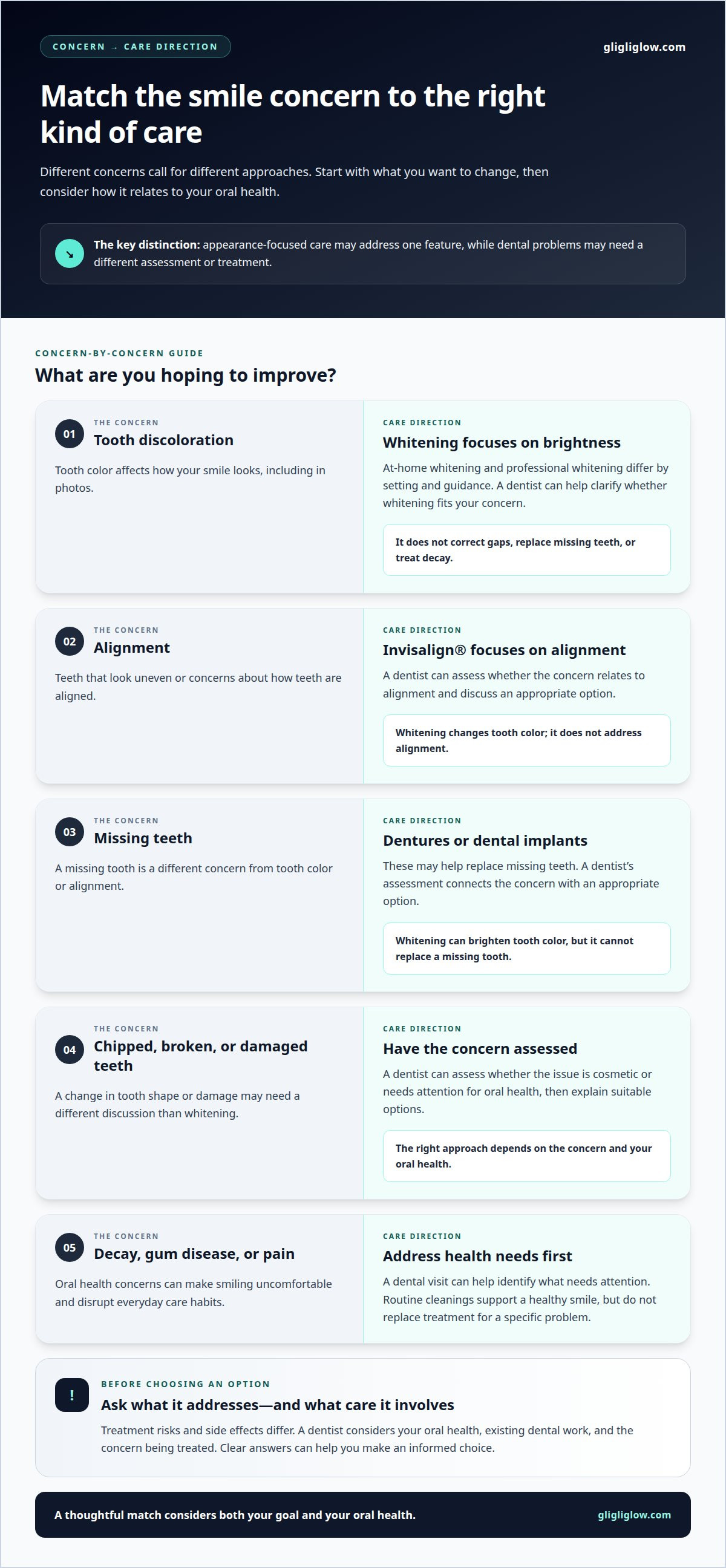
A smile concern may involve tooth color, alignment, missing teeth, or maintaining healthy teeth. Teeth whitening can address discoloration, while Invisalign® can address alignment. Dentures and dental implants may help replace missing teeth, and routine cleanings support a healthy smile. The right option depends on the concern, its effect on your oral health, and what you hope to change.
Potential risks and side effects differ by treatment. A dentist considers your oral health, existing dental work, and the concern being treated before recommending an option. A change in tooth color, for example, calls for a different discussion than a missing or damaged tooth. Ask how a proposed treatment works, what effects may occur, and what care it involves. Clear answers can help you make an informed choice.
For appearance concerns, consult a dentist who specializes in cosmetic dentistry. Describe what affects how you feel about your smile, such as discoloration in photos or teeth that look uneven. The dentist can assess whether the issue is cosmetic, relates to alignment, or needs attention for oral health. This distinction matters: whitening may brighten tooth color, but it doesn’t correct gaps, replace missing teeth, or treat decay.
Consider your desired result and the everyday routine you can maintain. Whitening focuses on brightness; Invisalign® focuses on alignment; dentures and implants address missing teeth. Routine cleanings can help maintain a healthy smile, but they don’t replace treatment for a specific problem. A dentist’s assessment connects your goal with an appropriate option, supporting both appearance and oral health rather than appearance alone.
Oral care habits for maintaining a smile
A steady dental care routine supports a healthy smile and gives you practical ways to care for your mouth. Regular brushing and flossing help prevent dental problems; cosmetic dentistry doesn’t replace these everyday habits. The key is making care easy to repeat, even on busy mornings or tired evenings.
For children, begin oral hygiene when the first tooth appears. Use a soft, age-appropriate toothbrush and a small amount of fluoride toothpaste to clean gently. Encourage brushing for at least two minutes, twice a day, and daily flossing. Teach children to reach every area, including the back teeth and gumline. Children learning these steps can benefit from watching a parent brush and floss regularly.
Make the routine inviting. A colorful toothbrush, a favorite song, or a simple reward system can help a child stay engaged for a full brushing session. For example, play music while brushing and guide them to clean the front, back, and chewing surfaces. Calm, positive repetition can also ease anxiety around oral care, especially when an adult treats the routine as ordinary rather than a test.
Routine dental check-ups help monitor children’s dental development, identify concerns early, and provide professional cleaning. A positive visit can also help a child build a relationship with their dentist and reduce fear. Regular appointments add a professional perspective to daily care; brushing and flossing remain essential between visits.
Keep the takeaway simple: make brushing twice daily and flossing daily predictable parts of the day. A consistent routine supports oral health, while a dentist can address concerns that home care cannot. Science-backed habits don’t need to feel complicated. Start with a comfortable toothbrush, gentle cleaning, and a rhythm that suits your household. A cheerful smile may be a lovely bonus, but the lasting goal is care you can maintain.
GLI GLI
GLI GLI offers at-home teeth whitening options for people whose smile concerns include tooth discoloration. If you’re considering whitening as part of your personal care routine, explore the GLI GLI Teeth Whitening Kit, Teeth Whitening Gel Refills, Teeth Whitening Pen, and LED Whitening Device. These at-home options let you focus on tooth color alongside consistent oral care.
Whitening addresses color, not concerns such as tooth decay, gum disease, gaps, or missing teeth. If those issues affect your smile or oral health, discuss them with a dentist. For a color-focused at-home option, learn about the available GLI GLI offerings and choose what fits your needs. Contact GLI GLI with your questions.
Choose a next step that feels right for you
Start your next step with one clear intention: decide what would help you feel more comfortable about your smile. You might focus on a consistent care routine, discuss a concern with a dentist, or consider whether tooth color is the change you want. Keeping your goal specific can make building smile confidence feel more personal and manageable.
There’s no need to measure your smile against someone else’s. Choose care that fits your needs, and give yourself room to notice what feels different in everyday moments. If at-home whitening is the step you’re considering, GLI GLI can help you explore its whitening options and ask questions about choosing an approach.
Contact GLI GLI about your smile and take your next step with confidence.
Frequently Asked Questions
How Can I Improve My Smile?
Improve your smile by identifying the change you want most, then choosing a suitable next step. If tooth color concerns you, whitening may be relevant. If you notice pain, damage, or missing teeth, seek dental advice rather than treating the issue as cosmetic. Note what bothers you and whether it affects comfort, appearance, or both. That gives your next conversation a clear starting point.
How to use a smile as a confidence booster?
Use a relaxed smile as a simple way to enter an interaction, not as a performance you must maintain. Before speaking, take a calm breath, soften your expression, and greet the other person naturally. Try this when joining a meeting or introducing yourself to someone new. A smile can signal warmth and encourage connection, while confidence also comes from listening and being present.
Why Do Dental Imperfections Make You Feel Self-Conscious?
Dental imperfections can draw your attention to your smile and make you worry that others will notice them too. A chipped edge, visible gap, or discoloration may feel especially prominent in a close conversation or photograph. That self-focus can make it harder to relax socially, even when nobody comments. Identifying the exact concern helps separate what you’d like to change from assumptions about other people’s reactions.
What does building smile confidence mean?
Building smile confidence means becoming more comfortable expressing yourself, even if your teeth aren’t perfectly aligned or uniformly bright. It can involve accepting features you don’t want to change, addressing a concern that matters to you, or feeling more at ease in specific situations. For example, you might start by speaking up in a small group, then feel more comfortable smiling in photos over time.
What are practical ways to feel more confident about your smile?
Choose one situation where you’d like to feel more at ease, then make it manageable. If group photos feel difficult, begin with a picture alongside someone you trust. If conversations are the challenge, focus on what the other person is saying instead of monitoring your teeth. Notice which moments feel easier and build from there. A personal, gradual approach keeps confidence tied to your comfort, not perfection.
How can good oral hygiene improve smile confidence?
Good oral hygiene can support confidence by helping you feel prepared for close conversations and attentive to your oral health. It also gives you a steady way to care for your smile, rather than focusing only on appearance. If brushing or flossing causes discomfort, or you notice a change that concerns you, bring it up at a dental visit. Addressing the cause can make daily care more comfortable.


