


The answer to “Can I whiten my teeth if I have a cavity?” is generally no. Wait until a dentist has examined the tooth and treated any active decay. Whitening gel may pass through a cavity to sensitive inner layers, causing pain or increased sensitivity. It won’t repair the decay, either.
It makes sense to want a brighter smile without risking discomfort. The challenge is that a cavity can be symptom-free, while whitening may make the affected tooth much more sensitive. Avoid whitening toothpaste, too, until a dentist has assessed and treated the decay.
Here, you’ll learn why a dental exam matters before whitening, how peroxide-based products can affect a decayed tooth, and what changes after a cavity has been treated. You’ll also find out why fillings may not whiten like natural teeth, helping you plan for a brighter smile with care.
Key Takeaways
- A cavity can be easy to miss, so a dental exam helps identify problems that may affect whitening.
- Whitening gel may cause sharp sensitivity if it reaches deeper layers through decay.
- Fillings don’t whiten like natural teeth, which can affect how evenly your smile looks afterward.
- Learn how cavity treatment and the timing of whitening can help you plan for a brighter smile more comfortably.
Dental examination before whitening
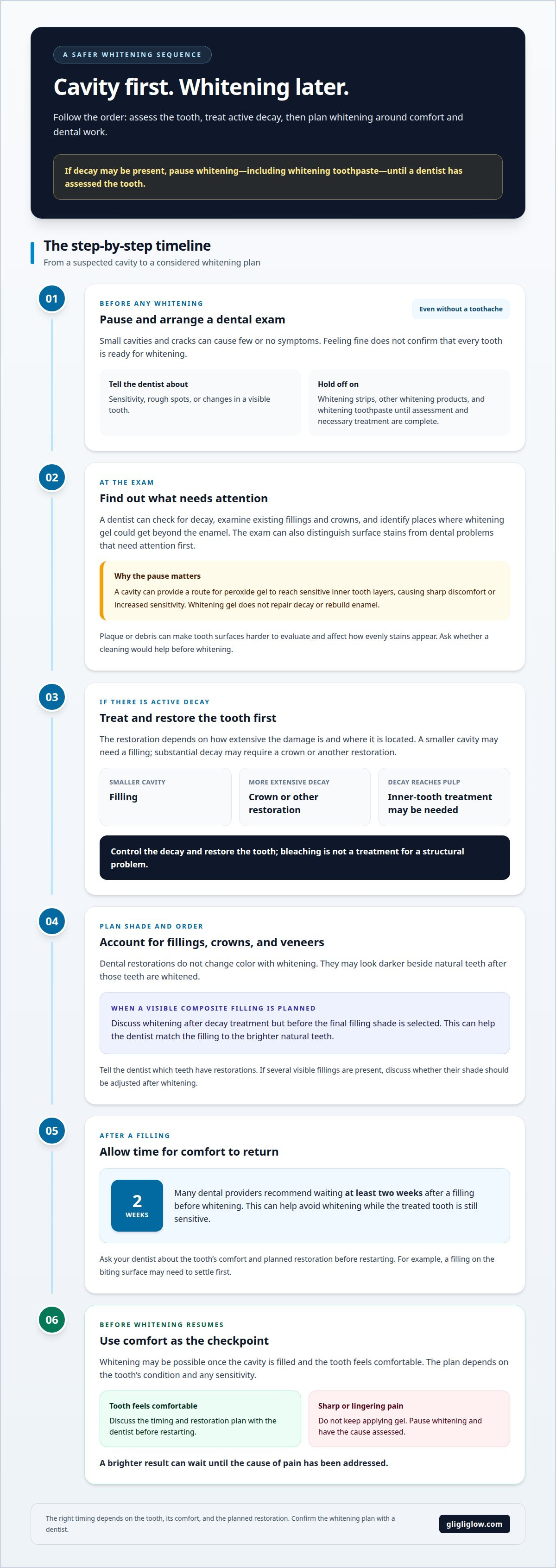
Book a dental examination before whitening if you suspect decay, even if you don’t have a toothache. Small cavities and cracks can cause few or no symptoms, so feeling fine doesn’t mean every tooth is ready. A dentist can check for decay, examine existing fillings and crowns, and identify areas where whitening gel might get beyond the enamel. This helps distinguish surface stains from dental problems that need attention first.
At the visit, mention any sensitivity, rough spots, or changes in a visible tooth. The dentist can assess whether decay needs treatment and whether a cleaning would help before whitening. Plaque or debris can make tooth surfaces harder to evaluate and affect how evenly stains appear. If there’s a cavity, restoring the tooth takes priority over covering discoloration with whitening gel.
Discuss the shade of new dental work as part of your whitening plan. Fillings, veneers, and crowns don’t change color with whitening, so they may look darker beside newly brightened natural teeth. If a front tooth needs a composite filling, whitening after decay treatment but before the final filling is placed can help the dentist match its shade to your brighter teeth.
Timing matters after a filling, too. Many dental providers recommend waiting at least two weeks after a filling before whitening. This can help avoid using whitening gel while the treated tooth is still sensitive. Ask your dentist about the tooth’s comfort and the planned restoration before restarting. For example, a filling on the biting surface may need to settle before whitening begins.
Think of the exam as a shade-planning step, not just a cavity check. The dentist can identify which teeth are natural and which have restorations, then explain how each may respond. If you have several visible fillings, discuss whether their shade should be adjusted after whitening. Starting with healthy teeth and planning the order of whitening and dental work can help create a more even-looking result.
Is Teeth Whitening Possible With Cavities?
Yes, teeth with filled cavities can be whitened, but active decay needs treatment first. If you’re asking, “Can I whiten my teeth if I have a cavity?” the practical answer is to pause and get the tooth assessed. A dental exam helps distinguish a cavity from a small decalcified area, which may need a different approach. Until assessment and any necessary treatment are complete, avoid whitening strips and other whitening products, including whitening toothpaste. Whitening gel doesn’t disinfect decay or rebuild enamel, so it can’t resolve the cause of a cavity.
Treating decay first protects the tooth from further damage. Bacteria can move through a cavity, and whitening gel may reach deeper layers through the damaged structure, triggering sensitivity or pain. If decay has reached the pulp, the dentist may need to treat the tooth’s inner tissue before considering whitening. A root canal may be needed, followed by a restoration to protect the tooth.
The restoration depends on the extent and location of the damage. A smaller cavity may be repaired with a filling; substantial decay may require a crown or another restoration. For example, a tooth with extensive damage may need protection before cosmetic whitening is planned. The goal is to control decay and restore the tooth, not to use a bleaching agent to address a structural problem.
After treatment, the sequence depends on the tooth’s condition and any sensitivity. Whitening may be possible once the cavity is filled and the tooth feels comfortable. A new composite filling won’t lighten with whitening gel, so whitening before its final shade is selected can help the dentist match it to brighter natural teeth. If treatment involves a root canal or crown, include that restoration in the shade plan. Still wondering, “Can I whiten my teeth if I have a cavity?” Don’t restart strips while the tooth remains sensitive. Sharp or lingering discomfort needs attention before whitening continues.
Risks of whitening teeth with cavities
Yes. Whitening can worsen cavity-related pain or sensitivity. Peroxide may pass through decay and reach sensitive inner tooth layers, causing sharp discomfort. Even healthy teeth can feel sensitive during whitening, but an active cavity creates an additional vulnerable area. If one tooth hurts more than the others while you’re whitening, stop using the product and arrange a dental appointment to have it assessed.
Discomfort can also occur during meals. Hot coffee, cold water, or sweet foods may trigger a sharp jolt in an affected tooth. Sensitivity can continue after a whitening session, so don’t dismiss lingering pain as a normal cosmetic trade-off. Decay can progress toward the dentin and pulp, and gel reaching these layers may cause deeper irritation. Severe decay involving the nerve can require more extensive dental treatment.
Gums are another consideration. Whitening products can irritate gum tissue, especially if gel touches it directly. A cavity near the gum line or existing gum inflammation can make irritation more uncomfortable. At-home strips or trays may fit poorly, allowing peroxide gel to leak onto gums or sensitive areas of a tooth. For example, gel that spreads beyond a strip’s edge may irritate the gum beside a decayed tooth.
Pay attention to where the discomfort occurs. General, brief sensitivity differs from intense pain focused on one tooth. That reaction may signal an underlying problem, such as decay or a damaged restoration, rather than typical whitening sensitivity. Don’t keep applying gel to see if the pain settles. Pause whitening and tell your dentist where it hurts, when it happens, and what triggers it. An appointment can determine whether decay, gum irritation, or another issue needs attention before whitening resumes. Comfort comes first; a brighter smile can wait until the cause of pain is addressed.
How whitening agents affect teeth with cavities
Peroxide-based whitening agents move through porous enamel to clear stains beneath the tooth’s surface. Healthy enamel limits how deeply the gel penetrates. A cavity changes that route: the damaged opening may allow whitening gel to reach inner tooth layers that enamel normally shields. That’s why a decayed tooth may react differently from a healthy, stained tooth during the same whitening routine.
Consider a small cavity on a molar. Gel applied across the tooth may contact the damaged area and reach the dentin or, with deeper decay, the pulp. These inner structures are more sensitive than the outer enamel. As a result, an ordinary whitening sensation may become sharp discomfort focused on that molar. Whitening gel targets stains, not the cause or structure of tooth decay.
Over-the-counter strips generally contain lower peroxide levels than professional treatments, but a lower concentration doesn’t stop gel from entering an open cavity. Placement matters, too. A strip overlapping a damaged spot can expose it directly; a poorly fitting tray may let gel spread beyond the intended tooth surface. Don’t use a stronger product or apply extra gel to make a cavity look brighter. Decay doesn’t whiten like surrounding natural tooth structure.
Whitening changes the appearance of natural teeth, but not the shade of fillings, crowns, or veneers. For example, natural enamel may become brighter while a composite filling stays its original color. The contrast can make the restoration more noticeable, even though whitening has treated stains in the natural teeth. Planning the whitening sequence helps account for both the tooth’s condition and existing dental work. The key distinction is simple: bleaching agents can lighten stains through healthy enamel, but a cavity creates a pathway into vulnerable layers. Whiten only after decay has been assessed and treated.
GLI GLI: GLI GLI Teeth Whitening Kit
The GLI GLI Teeth Whitening Kit is an at-home whitening option to consider after cavity treatment, once whitening is appropriate for your teeth. It supports the next step in your smile-care routine, not cavity treatment itself. Keep the steps separate: address decay first, then focus on whitening.
GLI GLI also offers Teeth Whitening Gel Refills, a Teeth Whitening Pen, and an LED Whitening Device for other at-home formats. Use these as part of a whitening routine for treated teeth, not to manage active decay or tooth pain.
Ready to explore at-home whitening options? Visit gligliglow.com.
Make your next whitening step a confident one
If you’re still asking, “Can I whiten my teeth if I have a cavity?” let that question guide your timing, not a rushed routine. Your next step is to make space for both oral health and the smile you want: keep track of any tooth discomfort, note the shade result you hope for, and use that information when planning your whitening routine after dental care.
Once whitening is appropriate for you, choose an at-home approach that feels manageable and fits naturally into your self-care habits. A thoughtful routine is easier to maintain when you understand what you’re using and feel comfortable with the plan. If you have questions about GLI GLI’s whitening offerings, contact GLI GLI with your questions.
A brighter smile can start with a small, considered choice. Take it at your own pace, and let feeling good about your smile be part of the journey.
Frequently Asked Questions
Black and White: Will Cavities Interfere With My Whitening Treatment?
Yes, an active cavity can affect both comfort and appearance during whitening. The decayed area won’t lighten like natural tooth enamel, so it may remain visible as surrounding teeth brighten. For example, a dark spot may stand out more afterward. A filling or crown can also retain its existing shade, creating a color difference beside newly whitened teeth.
Can whitening reveal a cavity I didn't know about?
Whitening may make an untreated cavity more noticeable if nearby natural enamel becomes brighter, but it can’t diagnose decay. A dark patch or new sensitivity doesn’t prove you have a cavity, since other tooth changes can look similar. If you notice a spot or discomfort during whitening, pause the product and arrange a dental examination instead of applying more gel to test it.
What if I've been whitening and then find out I had a cavity the whole time?
Stop whitening and tell your dentist which product you used, how often you applied it, and whether one tooth became painful. This context can help the dentist assess irritation alongside the cavity. Don’t resume strips, gel, or whitening toothpaste while the tooth is being evaluated. If pain lingers or feels sharp, mention it clearly at your appointment.
Can you whiten your teeth if you have an untreated cavity?
No. Don’t whiten teeth with an untreated cavity, including with whitening toothpaste or strips. Gel may reach vulnerable inner tooth layers through the damaged area, while the whitening product can’t repair or disinfect decay. If you’re unsure whether a spot is active decay or another change, pause whitening and ask a dentist to assess it before restarting.
Why should cavities be treated before teeth whitening?
Treating decay first protects the tooth from further damage and avoids exposing the affected area to whitening gel. It also gives you a clearer plan for visible dental work. For instance, if a front tooth needs a new filling, planning the whitening and restoration sequence can help the dentist choose a shade that blends with the surrounding natural tooth.
What risks can whitening cause when a tooth has a cavity?
Whitening a tooth with decay can cause increased sensitivity, sharp pain, or discomfort that continues after a session. Gel may also irritate nearby gums if it leaks from a strip or tray. If one tooth reacts much more strongly than the others, stop whitening and have the cause assessed instead of repeating the treatment or applying more gel.


