


The teeth whitening trends 2026 are leaning toward natural-looking, personalized smiles rather than a one-shade-fits-all finish. The best-looking result is one that feels bright while still looking like you. At-home LED kits are part of the conversation, too, bringing the whitening routine into everyday self-care.
It makes sense to want a fresher smile without losing what makes it yours. But how long can a subtle result last, and what should you know before trying an LED kit at home? Your habits, the cause of discolouration and how you use a whitening product all matter.
Here, you’ll explore why whitening remains popular, what can affect how long results last and how smile aesthetics are shifting towards a more natural look. You’ll also get a clear-eyed look at at-home LED kits, including practical points to consider when choosing a routine that suits your smile and comfort.
Key Takeaways
- Compare professional and over-the-counter whitening by the method and routine that suit your needs.
- Learn what can influence how long a brighter smile lasts, including stain-causing foods and drinks.
- Explore why personalized, natural-looking smile aesthetics can feel more balanced than a one-shade-fits-all result.
- Understand what to consider about sensitivity and product directions before adding an at-home LED whitening kit to your routine.
Why Are So Many People Whitening Their Teeth Right Now?
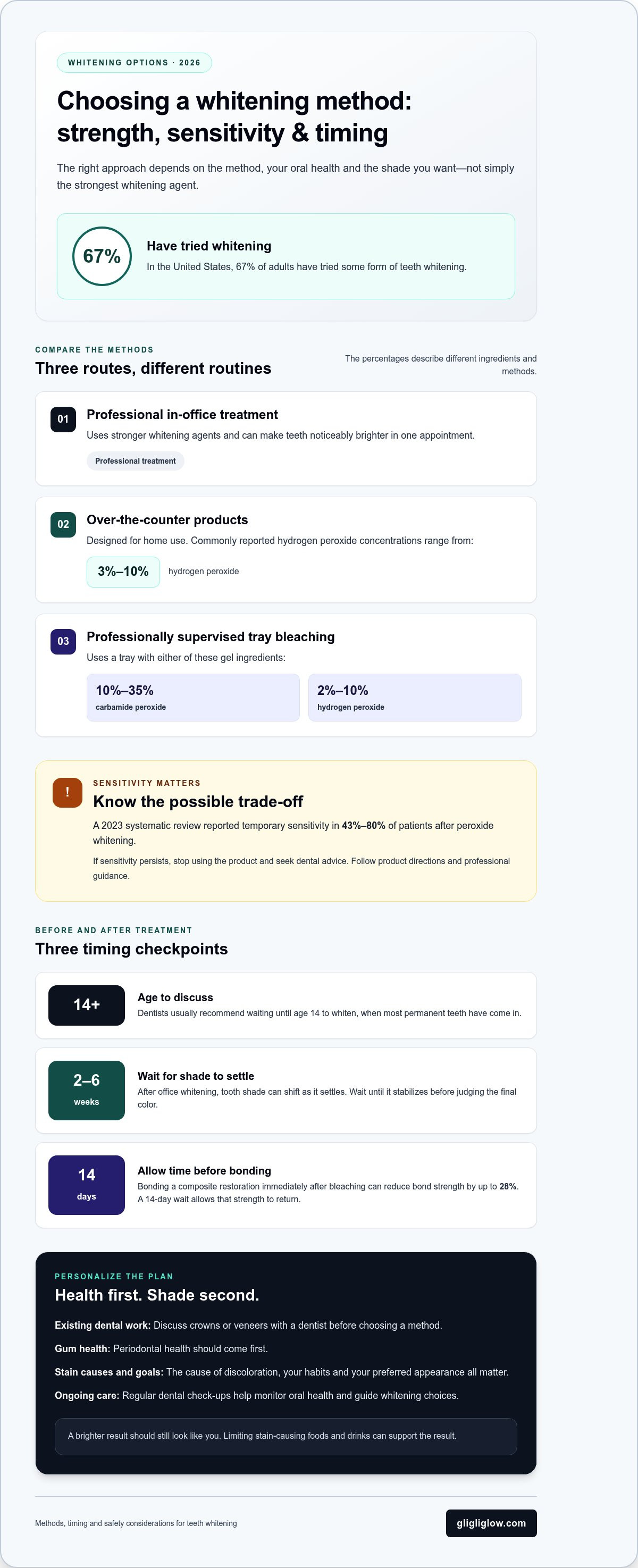
The teeth whitening trends for 2026 favor brighter smiles that still look natural. Whitening is popular partly because it offers a cosmetic change without altering tooth structure. In the United States, 67% of adults have tried some form of whitening. The choice now ranges from professional treatments to products used at home.
Professional in-office treatments use stronger whitening agents and can make teeth noticeably brighter in one appointment. Over-the-counter products are designed for home use, with commonly reported hydrogen peroxide concentrations of 3% to 10%. The method matters: professional strength does not automatically mean the right fit for every patient. Professionally supervised tray bleaching offers another option, using gels with 10% to 35% carbamide peroxide or 2% to 10% hydrogen peroxide. Follow the product directions and professional guidance to protect enamel while working toward your preferred shade.
How much do professional in-office treatments cost in 2026? That is a general treatment range, not a price for an at-home whitening product.
Bonding can complement whitening when a smile needs a targeted aesthetic adjustment. Timing matters: bonding a composite restoration immediately after bleaching can reduce bond strength by up to 28%. A 14-day waiting period after bleaching allows that strength to return. Patients planning both treatments should discuss the sequence as part of their dental care plan.
What are the risks and side effects? A 2023 systematic review reported temporary sensitivity in 43% to 80% of patients after peroxide whitening. Patients with crowns or veneers should discuss existing dental work before choosing a method, and periodontal health should come first. Dentists usually recommend waiting until age 14 to whiten, when most permanent teeth have come in. Regular dental check-ups help monitor oral health and guide whitening choices; stop using a product and seek dental advice if sensitivity persists.
How long will these natural looking results actually last?
Whitening results don’t have one fixed lifespan. Stain-causing foods and drinks can affect how long a brighter shade lasts, so limiting them supports your result. After office whitening, tooth shade can shift as it settles. Wait until it stabilizes, approximately 2 to 6 weeks after treatment, before judging the final color. That gives you a more realistic view than assessing your smile immediately after bleaching.
Health-first cosmetic dentistry means choosing care based on oral health, not shade alone. Regular dental check-ups let dentists monitor your mouth and tailor whitening procedures to your needs. The cause of discolouration and your long-term goals both matter when selecting a treatment. If a whitening routine causes sensitivity, pause and seek dental advice before continuing. A natural-looking result should suit your smile and your oral health priorities.
FDA rules differ by product category. The FDA classifies whitening devices as Class I medical devices that require registration but not premarket approval. It also recognizes ISO 28399 as a consensus standard for external tooth bleaching products. These facts describe devices and a product standard; they don’t mean every cosmetic whitening product follows the same pathway. Read product directions carefully, and consider how the method fits your dental care routine.
Whitening and cosmetic dentistry also have different durability timelines. Whitening changes tooth color, while veneers are a separate aesthetic treatment. High-quality porcelain veneers may last 15 to 20 years with proper care. Modern aesthetic dentistry results can last two decades or more with proper care, but that figure isn’t a promise about bleaching results. Protect oral health with consistent care and limit stain-causing foods and drinks. For a home-based whitening routine, explore at-home teeth whitening options and follow the product directions.
Natural-looking teeth whitening and smile aesthetics
In 2026, dental aesthetics favor smiles that look natural, personalized, and minimally invasive. That shift moves attention away from a uniform, ultra-bright shade. Instead, treatment choices consider existing tooth color, visible discoloration, and the person’s preferred appearance. Whitening can be one focused improvement, while other cosmetic treatments may address different concerns. The aim is a balanced result that still feels recognizably yours.
A trial smile can make that choice feel more concrete. Digital smile design lets patients preview a planned result before a procedure begins. Use the preview to discuss shade, shape and how noticeable the proposed changes should look. It’s a planning conversation, not a reason to choose the brightest option automatically. Compare the proposed appearance with your natural features, and explain what feels too dramatic or too subtle.
Digital planning can combine photographs, videos and intraoral scans to support precision. These views help the dental team assess how teeth look from different angles, rather than relying on a single front-facing image. Ask which details the preview represents and which treatment changes it assumes. This makes it easier to understand how whitening or other aesthetic treatments may affect your overall smile.
Artificial intelligence can also help dentists personalise whitening plans using dental history and lifestyle factors. For example, a plan may account for habits that contribute to discolouration and the patient’s long-term goals. AI supports assessment, but it doesn’t replace a clear discussion of treatment choices. Before starting, review the planned shade, the methods involved and how each step relates to your oral health. A thoughtful plan prioritises subtle improvements and a natural appearance over copying someone else’s smile.
At-home LED whitening kits
At-home LED kits appeal to people who want a whitening routine that fits around daily life. The device is one part of the system; the whitening agent does the whitening work. Formulas are increasingly designed to help reduce sensitivity while producing results. Follow the specific product directions rather than assuming longer or more frequent use will make teeth brighter.
What new whitening ingredients or technologies are trending in 2026? More than 30% of new teeth-whitening product launches use PAP, a peroxide-free whitening agent. That points to growing interest in alternatives to peroxide-based formulas. An ingredient trend alone doesn’t tell you how a particular kit will feel or perform, so look at its directions and consider your comfort with its whitening agent.
Give sensitivity your attention during an at-home routine. It usually peaks on day three or four of treatment and often subsides within a day or two after treatment stops. One suggested approach is brushing with desensitizing toothpaste for 2 weeks before whitening. If sensitivity appears, pause rather than pushing through discomfort, and follow the product’s instructions for resuming or stopping use.
Dental work deserves consideration, too. Whitening changes natural tooth color, so veneers and restorations may not match newly whitened teeth in the same way. If your smile includes visible dental work, factor that into your shade goals before starting. A dentist can help you consider oral health, existing restorations, and the whitening method. In June 2025, the ADA updated its clinical protocol guidelines for home-use tooth bleaching products, making sound directions and informed use especially relevant. Choose a routine you can follow comfortably, and explore at-home LED whitening options as you compare approaches.
GLI GLI: GLI GLI Teeth Whitening Kit
GLI GLI Teeth Whitening Kit is an at-home option for readers exploring a guided whitening routine. Choose an at-home approach when it fits your goals and you’re ready to follow the product directions carefully. Aim for a natural-looking shade, and pause if you experience sensitivity.
GLI GLI also offers Teeth Whitening Gel Refills, a Teeth Whitening Pen and an LED Whitening Device for your routine. These options provide different at-home formats to consider, from a kit to a pen or device. Read the instructions for the specific product you choose, and keep existing dental work in mind when setting your shade expectations.
Explore GLI GLI’s at-home whitening options at gligliglow.com.
Choose a whitening routine that feels like you
The teeth whitening trends of 2026 point toward a more personal approach: choose a routine that supports the smile you want, not someone else’s ideal. Before starting, consider your comfort, your existing dental work, and whether an at-home routine suits your needs. Small, thoughtful choices can make self-care feel easier to maintain.
GLI GLI offers the GLI GLI Teeth Whitening Kit, GLI GLI Teeth Whitening Gel Refills, and GLI GLI Teeth Whitening Pen for at-home whitening routines. Explore the product directions and decide which format fits your preferences. If you’d like to discuss GLI GLI’s at-home whitening options, contact GLI GLI about your smile.
Keep your approach comfortable, informed, and true to you. A smile that feels like your own is always worth celebrating.
Frequently Asked Questions
Are Hydrogen Peroxide-Free Whitening Products Safer?
Not automatically: peroxide-free describes an ingredient approach, not a blanket safety guarantee. Some newer whitening products use PAP, while others use peroxide-based agents. Check the full ingredient list and follow the product directions rather than assuming peroxide-free means risk-free. If you have sensitive teeth, allergies or existing dental concerns, discuss the ingredients with a dental professional before choosing a product.
What are the biggest teeth whitening trends in 2026?
The biggest themes are natural-looking shade goals, personalised treatment choices and interest in at-home LED kits. AI-assisted planning can help dentists consider dental history and lifestyle when discussing options. Peroxide-free ingredients such as PAP are also appearing in new product launches. Together, these trends point towards choosing a method for your smile and routine, rather than chasing the brightest possible shade.
Which at-home teeth whitening products are most popular in 2026?
There isn’t one best format for everyone, but familiar at-home options include whitening toothpaste, strips, gels, pens, trays and LED kits. Toothpaste can suit a simple daily routine, while strips or gel-based kits offer a dedicated whitening course. Pens can target particular areas. Choose by reading the directions, considering your sensitivity and matching the format to how consistently you can use it.
How do whitening strips, trays, toothpaste, and professional treatments compare?
They differ in application, concentration, and supervision. Whitening toothpaste fits routine brushing, while strips hold whitening agents against tooth surfaces for a set course. Trays keep gel close to the teeth; professionally supervised trays use dentist-guided treatment. In-office whitening is performed during a dental appointment. Existing dental work and the cause of discoloration can affect which approach best suits your goals.
Are LED teeth whitening devices effective and safe?
LED devices are used alongside whitening products, but the whitening agent and correct use remain central to the routine. An LED light alone isn’t a substitute for following the kit’s directions. Choose a device intended for teeth whitening, use it only as directed and stop if discomfort develops. Ask a dental professional for advice if you have oral-health concerns or existing restorations.
How long do teeth whitening results last, and how can they be maintained?
Whitening results fade as teeth encounter stain-causing foods and drinks, and the pace varies with habits and the original discolouration. To help maintain your shade, limit staining items, keep up regular oral care and attend dental check-ups. Follow product directions for any touch-up routine rather than whitening more often than instructed. If you’re considering another course, first assess whether your teeth and gums feel comfortable.


