


The LED light may be the least important part of your whitening decision. In the pre-filled whitening trays vs LED kit comparison, the formula, tray fit, instructions, and your comfort can matter more than a glowing device. If you’re concerned about sensitivity or unsure which format suits your routine, comparing the product details can help.
Both options are designed for at-home use, but they deliver gel differently: pre-filled trays come ready with whitening gel, while an LED kit pairs gel with a light device. The added benefit of the light isn’t clear-cut, so don’t choose on LED claims alone. Check the gel’s active ingredients and directions, too.
This guide compares convenience, fit, and comfort to help you choose an option that feels manageable. You’ll also find practical checks for using products according to their instructions, when to pause if sensitivity develops, and when to ask a dental professional for advice, especially if you have dental restorations or ongoing tooth sensitivity.
Key Takeaways
- In the pre-filled whitening trays vs LED kit comparison, look beyond the format to gel ingredients, tray fit, and the steps each routine involves.
- An LED device doesn’t automatically mean better whitening; consider the product instructions and evidence behind its claims.
- Choose based on the fit and comfort of the specific product, plus how easily its routine fits your day.
- Check your oral health, read the label, follow directions, and pause whitening if you experience concerning sensitivity.
- Explore GLI GLI’s LED whitening kit, device, gel refills, and sensitive-teeth options as alternatives to pre-filled trays.
Pre-Filled Whitening Trays vs LED Kit: What Is the Difference?
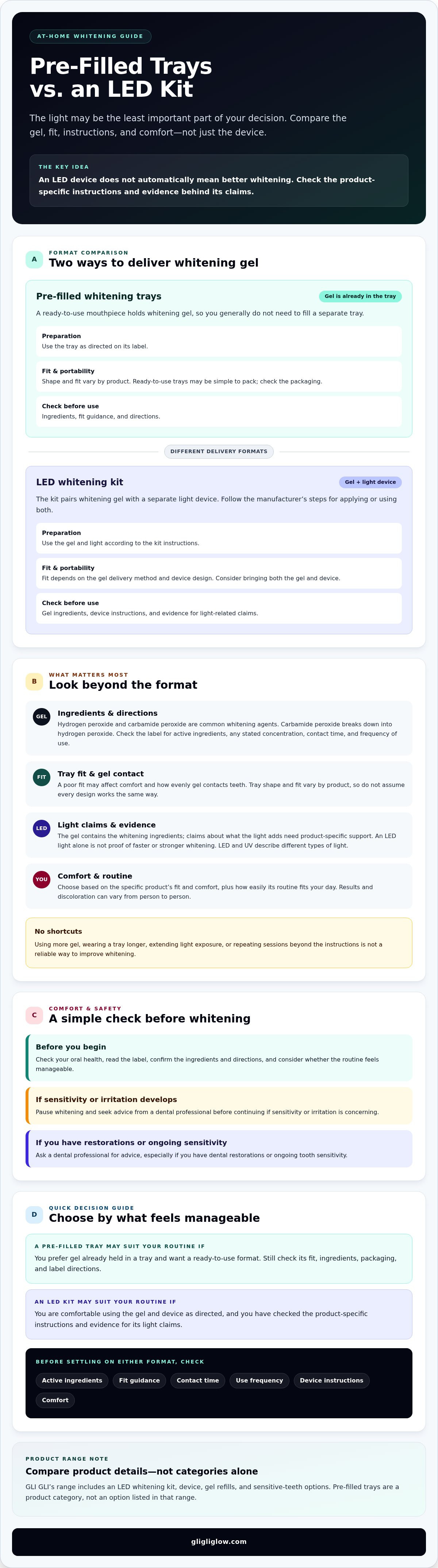
Both formats are designed for at-home whitening, but they deliver gel differently. A pre-filled tray holds whitening gel in a ready-to-use mouthpiece; an LED kit pairs a whitening product with a separate light device. The tray is the gel’s delivery format, while the LED is an additional device used as directed by its kit. Use this comparison to identify what to check before buying.
| What to compare | Pre-filled trays | LED kit |
|---|---|---|
| Preparation | Gel is already in the tray. | Follow the kit’s steps for applying or using the gel and device. |
| Fit | Shape and fit vary by product. | Depends on the gel delivery method and device design. |
| Portability | Ready-to-use trays may be simple to pack; check the packaging. | Consider both the gel and the device you’ll need to bring. |
| Routine | Use the tray as directed on its label. | Use the gel and light according to the kit instructions. |
| What to verify | Ingredients, fit guidance, and directions. | Gel ingredients, device instructions, and evidence for light-related claims. |
How do pre-filled whitening trays work?
The whitening gel comes in the tray, so you generally don’t need to fill a separate mouthpiece. Some products are disposable or ready to use, but tray shape, fit, and directions vary. Check the label for how to position and use the tray; don’t assume every design works the same way. Pre-filled trays are a product category, not an option listed in GLI GLI’s range.
What does the LED device add to a whitening kit?
An LED kit combines whitening gel with a light device, which you use as the manufacturer directs. Keep the two roles distinct: the gel contains the whitening ingredients, while claims about what the light adds need product-specific support. Hydrogen peroxide and carbamide peroxide are common whitening agents; carbamide peroxide breaks down into hydrogen peroxide. For a wider overview of methods and ingredients, see Tooth whitening.
When weighing pre-filled whitening trays vs LED kit, don’t let the device alone decide for you. Compare the formula, instructions, fit, and practical steps. An LED light isn’t, by itself, proof of faster or stronger whitening. Start with what the product contains and how comfortably you can follow its directions.
How Ingredients, Tray Fit, and LED Light Affect the Experience
The format is only one part of the experience. The gel’s ingredients, how it contacts your teeth, and how closely you follow the directions all matter. Make the pre-filled whitening trays vs LED kit decision by checking the specific product, not relying on broad promises about an entire category.
Why the whitening gel matters in either format
Hydrogen peroxide and carbamide peroxide are common active whitening ingredients. Carbamide peroxide breaks down into hydrogen peroxide, but products aren’t interchangeable just because they share an ingredient name. Check the label for active ingredients, any stated concentration, how long to keep the product in contact with your teeth, and how often to use it.
Follow the directions even if a tray seems loose or the routine feels too gentle. A poor fit may affect comfort and how evenly the gel contacts teeth. Using more gel or wearing a tray longer than instructed isn’t a reliable shortcut. If a label makes specific claims about concentration, results, or regulatory status, verify those details with a qualified reviewer before relying on them. The American Dental Association’s whitening guidance offers additional context on whitening options and considerations.
Does LED light make whitening work better?
It depends on the particular product and the evidence supporting its claims. An LED device is not a substitute for following the gel instructions. Look for clear, product-specific information about what the light is intended to do, and don’t treat marketing language as proof that it improves results. LED and UV describe different types of light, so claims about one shouldn’t automatically be applied to the other.
Use the device only as directed. Extending exposure or repeating a session beyond the instructions doesn’t guarantee better whitening and may make the routine harder to tolerate. If sensitivity or irritation develops, pause and seek advice from a dental professional before continuing.
Results can also depend on the kind of discoloration. Whitening may help with surface stains from foods and drinks, but natural tooth colour and deeper staining vary from person to person. Crowns, veneers, and fillings won’t whiten like natural teeth, so ask a dental professional about existing dental work or concerns before starting.
For a more informed comparison, review the gel details and use instructions for each option you’re considering. If you’re exploring an LED format, you can also review GLI GLI’s whitening kit and gel options as part of your research.
Which Option Suits Your Routine: Trays or an LED Whitening Kit?
The best fit is the option whose directions, application, and routine feel manageable. Ready-to-use trays may reduce setup, while a device-and-gel kit adds a step and an item to care for. Neither format is automatically more comfortable: fit depends on the specific product and your teeth. An LED device alone doesn’t prove better whitening results, so look for credible evidence behind product-specific claims.
| Format | Potential advantages | Things to consider |
|---|---|---|
| Pre-filled trays | Gel is supplied in the tray, which may make application feel straightforward. | Check tray coverage, fit guidance, and how to use or dispose of it. A tray that feels uncomfortable may not suit you. |
| LED whitening kit | A kit can appeal if you prefer a device-and-gel routine with instructions for using both. | Account for setup, storage, device care, and the full session directions. The light isn’t proof of stronger results. |
These are general format differences, not guarantees. Products vary in formulation and instructions, so compare the actual labels and directions before deciding.
When might pre-filled trays feel more convenient?
If you’d rather avoid a separate gel application step, a ready-to-use tray may feel simpler. Convenience still depends on whether it fits comfortably and covers the areas you want to whiten. Review the product’s fit guidance and directions first. If it feels poorly fitted or the amount of gel seems excessive, don’t improvise: follow the manufacturer’s instructions, and stop if use causes discomfort.
When might an LED kit fit your routine?
A device-and-gel format may suit someone who likes a defined kit routine and doesn’t mind setting up and storing an extra item. Before choosing, check how the device is used, how it should be cared for, and whether the full routine fits your schedule. GLI GLI’s LED whitening kit is one option to consider, not a universal winner.
Still weighing the formats? Consider which setup you’re more likely to use as directed, and whether the product’s instructions and fit seem comfortable for you. A scientific review of tooth whitening discusses whitening methods and considerations such as sensitivity, which can help inform your questions. If you’re interested in a device-and-gel format, you can explore GLI GLI’s LED whitening kit as part of your comparison.
How to Choose and Use a Whitening Format More Confidently
A little label-checking can make the choice between pre-filled whitening trays vs LED kit clearer. Use this checklist before starting, and remember that a tray or device won’t be right for every mouth or dental situation.
- Check your oral health. If you have existing dental concerns, sensitivity, or restorations such as crowns, veneers, or fillings, ask a dental professional before whitening. They can help you understand whether at-home whitening is suitable for you.
- Read the product label. Review the ingredients, stated contact time, frequency, and full usage directions. For a device-based kit, check how the device should be used and cared for. Treat claims about ingredients or results as claims to verify, not guarantees.
- Compare fit and coverage. Look for instructions about tray fit and which teeth the product is intended to contact. Don’t assume a ready-to-use tray or kit will feel comfortable for everyone.
- Follow the directions exactly. Stick to the stated session duration and frequency. Don’t add gel, extend wear time, or use the device longer in hopes of getting faster results.
- Review how your teeth and gums respond. Pay attention during and after use. If sensitivity becomes uncomfortable or gum irritation develops, pause whitening and seek suitable advice.
What should you check before buying?
Look for clear instructions on application, contact time, and any device use. Check whether the label explains what to do if you already have sensitivity or dental work. If a product’s claims are unclear, ask a dental professional or the seller for clarification before use. A sound buying decision starts with the information available, not assumptions about which format suits everyone.
How can you reduce avoidable irritation?
Use only the amount and frequency stated on the product label, and keep whitening products away from children. Follow the storage directions, too. If discomfort persists or irritation develops, stop using the product and seek professional advice before deciding whether to restart. For extra support, look for a guide to using an at-home whitening kit safely and a sensitivity-focused whitening guide; use their advice alongside your product’s own directions.
Ready to compare a device-based option with your checklist in mind? Explore GLI GLI’s LED whitening kit and review its product instructions before choosing.
Explore GLI GLI's LED Whitening Kit and Gel Options
Now that you’ve compared the formats, apply the same practical checks to GLI GLI’s at-home range: product instructions, ingredients, compatibility, and how each option fits your routine. GLI GLI offers LED and gel-based products rather than pre-filled whitening trays.
Which GLI GLI options may be relevant?
The range includes the GLI GLI Teeth Whitening Kit, GLI GLI Teeth Whitening Gel Refills, and GLI GLI LED Whitening Device. GLI GLI also offers solutions intended for sensitive teeth. Check the current product information to confirm which options match your needs and how they’re intended to be used. The brand describes its products as developed by dental experts, but that description doesn’t replace reviewing the product label or asking a dental professional about your circumstances.
As you revisit the pre-filled whitening trays vs LED kit decision, focus on the actual kit and gel details rather than assuming the LED device guarantees a particular result. The format may suit your preferences, but ingredient information and clear directions are essential to an informed choice.
What to review before choosing a GLI GLI kit
Before using a product, read its current instructions and ingredient list. Confirm whether the gel and device are intended to be used together, and follow the stated use and storage guidance. If you have sensitive teeth, restorations, or other dental concerns, check the product information and ask a dental professional whether whitening is appropriate for you.
Be thoughtful about claims, too. Check any ingredient-approval or safety statement against its exact scope, and review the current terms and eligibility of any stated result guarantee. Don’t treat the presence of an LED device as proof that it improves whitening results. For broader product-selection context, consult a guide to choosing an at-home teeth whitening kit alongside the specific instructions for the product you’re considering.
Ready to explore the range and compare product details at your own pace? Explore GLI GLI's at-home whitening options.
Choose the Whitening Routine That Feels Right for You
The pre-filled whitening trays vs LED kit choice comes down to more than format. Compare the gel, fit, instructions, and steps involved, then choose a routine you can follow comfortably. An LED device alone doesn’t prove better results, and no tray or kit is guaranteed to suit every smile.
If sensitivity or irritation develops, pause whitening and seek advice from a dental professional. If you have existing dental concerns, check with them before you begin. A confident choice starts with clear product information and realistic expectations.
GLI GLI offers an LED whitening kit, LED device, gel refills, and solutions intended for sensitive teeth. The company describes its products as developed by dental experts, but it’s still wise to review current ingredients and instructions for yourself.
Ready to compare the options? Explore GLI GLI's at-home whitening options and review the product details before choosing a routine.
Frequently Asked Questions
Are pre-filled whitening trays better than an LED kit?
Neither format is automatically better for everyone. Pre-filled trays may mean less setup, while an LED kit involves using gel and a device according to its directions. In either case, the formulation, instructions, fit, and your dental needs matter. An LED device alone doesn’t establish superior results. Compare evidence for the specific product you’re considering, read its label carefully, and choose a routine you can follow as directed.
Does an LED whitening kit whiten teeth faster?
Not necessarily. Whitening results depend on the product’s formulation and instructions, your starting tooth colour, and how you use it. Claims that a particular light improves speed or effectiveness should be supported by evidence for that product, rather than assumed to apply to every LED kit. Follow the included directions for session length and frequency. Don’t extend sessions or use the device more often in hopes of speeding up results.
Are pre-filled whitening trays suitable for sensitive teeth?
They may be suitable for some people, but sensitivity varies, and the right choice depends on your teeth, the product’s ingredients, and its directions. Read the label for guidance about sensitivity and use. If sensitivity is persistent or you have other dental concerns, speak with a dental professional before whitening. Stop using the product and seek suitable advice if discomfort or gum irritation develops. Don’t assume every tray has the same formula or fit.
Can I use an LED whitening kit if I have crowns, veneers, or fillings?
Ask a dentist before starting if you have crowns, veneers, fillings, or other dental work. Whitening products may change the colour of natural teeth without changing restorations in the same way, which can affect how they look together. The outcome depends on your situation, so don’t assume a particular kit will whiten restorations or create a colour match. A dental professional can help you consider your existing dental work and whitening options.
How do I choose between whitening trays and an LED kit?
Compare the ingredients, fit guidance, contact time, ease of use, and any device instructions. Ask yourself whether you prefer a ready-to-use tray or a kit that includes a device. Comfort and results vary by product and person, so choose based on the label and what fits your routine. The presence of an LED light alone doesn’t establish better results. Look for product-specific evidence and follow the directions rather than relying on broad claims.
Can I use whitening trays and an LED kit together?
Don’t combine whitening products or devices unless the manufacturers’ instructions explicitly say they can be used together. Their formulas and session directions may not be compatible, and extra exposure can increase irritation. Use one product as directed rather than adding another step or extending use. If you’re unsure whether a product is appropriate for your teeth, or how it fits with another whitening product, pause and ask a dental professional for guidance.
What should I do if whitening causes tooth sensitivity?
Pause whitening and follow the product label rather than continuing through discomfort. If sensitivity is severe, persists after stopping, or occurs with gum irritation, seek advice from a dental professional. Sensitivity can have different causes, and the right next step depends on the individual, so don’t diagnose it yourself or create a new whitening schedule without guidance. Before using the product again, review its directions and ask a professional if you’re uncertain.


