


If you’re asking “should I brush my teeth before or after whitening,” brush gently beforehand, then follow your whitening product’s directions for what to do afterwards. Some general guidance recommends waiting after brushing before using strips or gels, since brushing immediately beforehand may leave your gums feeling irritated. The instructions for your specific product take priority.
Whitening can be easier to fit into your routine when you know which steps belong before and after a session. A practical starting point is to brush gently as part of your usual oral care, check whether your product specifies a wait time, and follow its instructions for removal, rinsing, and aftercare. Don’t add extra brushing if you miss your usual window.
This guide explains when to brush around a whitening session, how timing can vary by product, and what to do if you feel discomfort. Whether you use an at-home kit, gel, strip, or whitening pen, follow the directions for that product rather than applying a routine from another format.
Key Takeaways
- Still wondering, “should I brush my teeth before or after whitening”? Brush gently beforehand as part of your normal routine, then follow the product’s instructions for aftercare.
- Compare brushing before whitening, immediately afterwards, and at your next regular brushing to choose a practical routine.
- Brushing and whitening have different purposes. Keep your usual oral care gentle, and use whitening products only as directed.
- Check the instructions for your specific kit, gel, strip, or pen. Don’t ignore significant or persistent discomfort.
Should You Brush Before or After Teeth Whitening? The Short Answer
Brush gently before whitening, then follow the product’s instructions for what to do afterwards. Brushing beforehand can clear food debris as part of your normal routine, but the right timing depends on the product. Strips, gels, and pens can have different application, removal, rinsing, and aftercare steps. Read the instructions before you begin, and don’t brush harder or add extra brushing if you miss your usual window.
If you’re asking, “should I brush my teeth before or after whitening,” treat brushing beforehand as a practical starting point, not a rule that overrides the product instructions. Some general guidance suggests waiting after brushing before applying strips or gels. Use the timing given with your kit, gel, strip, or pen if it differs.
Why brushing before whitening is often the practical choice
Brushing beforehand can remove food debris and plaque as part of everyday oral care. Use your usual gentle technique rather than scrubbing or pressing hard. The aim is to start with clean teeth, not to polish them aggressively or try to increase the whitening effect.
Why there is no single after-whitening rule
Whitening formats differ. A strip may need to be removed, a gel may have specific rinsing directions, and a pen may have its own instructions for use. The broader Tooth whitening overview covers different methods and ingredients, but your product’s directions are the practical guide to its aftercare.
Quotable takeaway: Follow the product label because removal, rinsing, and brushing steps can vary by whitening method and formula.
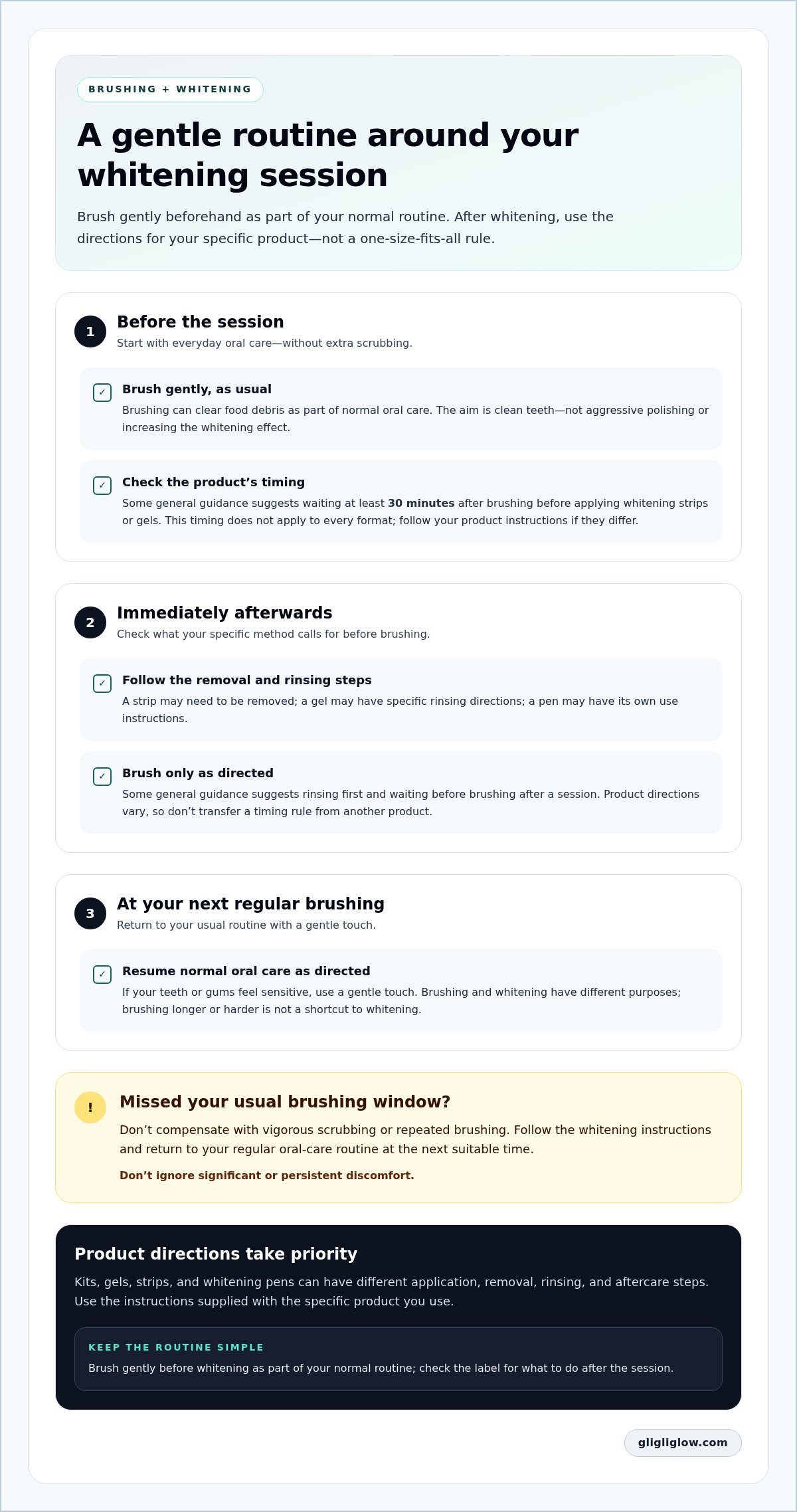
- Before your session: Brush gently as part of your normal routine. Follow any wait time given in the product directions.
- Immediately afterwards: Check whether the directions call for removal, rinsing, or another step before brushing.
- At your next regular brushing: Resume your usual routine as directed. Use a gentle touch if your teeth or gums feel sensitive.
Some general guidance suggests waiting at least 30 minutes after brushing before applying whitening strips or gels. After a session, rinsing first and waiting before brushing may also be advised. These timings do not apply to every format, so check your product’s instructions rather than transferring a rule from one product to another.
Missed your usual brushing window? Don’t compensate with vigorous scrubbing or repeated brushing. Follow the whitening instructions and return to your regular oral-care routine at the next suitable time. One missed step doesn’t need to become extra irritation.
What Whitening Does, and Why Brushing Timing Can Matter
Whitening and brushing have different jobs. A whitening product is designed to lighten some tooth discolouration; brushing is part of everyday cleaning. Keeping those purposes separate helps you plan a routine without treating a whitening session like an extra brushing step. Ingredients and directions vary by product, so general information about whitening chemistry does not describe every kit, gel, strip, or pen.
Tooth enamel is the hard outer layer that covers and protects each tooth. Whitening products are intended to change the appearance of discolouration, not to scrub away healthy enamel. If you’re wondering, “should I brush my teeth before or after whitening,” keep brushing gentle as part of your regular care, and use the whitening product only as its instructions describe.
How peroxide-based whitening products work
Some whitening products use hydrogen peroxide or carbamide peroxide as active ingredients. In simple terms, hydrogen peroxide can break down coloured compounds that contribute to tooth stains; carbamide peroxide releases hydrogen peroxide as it breaks down. The ADA Whitening Guidelines discusses these ingredients and notes that results and possible effects depend on the product and how it’s used. This describes peroxide-based products generally, not the formula of every whitening product.
Discolouration can have different causes and may respond differently to whitening. An ingredient description cannot promise a particular shade change, speed, or result for every person. Product directions are written for a specific formula and method, which is why they matter more than general advice about whitening products as a whole.
How brushing and whitening have different jobs
Brushing helps clean your teeth as part of everyday oral care. It isn’t a replacement for a whitening treatment, and brushing longer or harder isn’t a shortcut to the same effect. Choose toothpaste and brushing pressure according to your usual dental-care needs. Those choices are separate from the directions for applying or removing a whitening product.
Don’t assume that brushing immediately after whitening will damage enamel. The practical question is what your product instructs you to do. One format may have different removal or rinsing steps from another, so follow its label rather than applying a blanket rule. If the directions say to rinse, remove residue, or wait before brushing, stick to those steps.
Keep the routine calm and uncomplicated. GLI GLI’s teeth whitening products include kits, gel refills, and a whitening pen. Follow the instructions supplied with the specific product you use.
Brushing Before vs. After Whitening: What Should You Do?
There isn’t one brushing schedule for every whitening product. Use this comparison as a quick guide, then follow the instructions for your specific product. The goal is a gentle, consistent routine, not extra scrubbing to chase a brighter look.
| Timing | Practical consideration | What to follow |
|---|---|---|
| Before whitening | Gentle brushing can clear away food debris as part of your normal routine. | Check whether your product specifies a wait time before application. |
| Immediately afterwards | Don’t assume you need to brush at once. The product may have removal or rinsing steps first. | Follow its directions for removal, rinsing, and brushing. |
| At your next routine brushing | Return to your usual oral-care schedule, using a gentle touch. | Follow any product-specific aftercare and pay attention to discomfort. |
Brushing twice in a short window, pressing harder, or scrubbing longer doesn’t make whitening safer or more effective. If you’ve already brushed before your session, there’s usually no reason to repeat it just because you’re about to whiten. More pressure isn’t a shortcut to a whiter appearance, and it may leave your teeth or gums feeling uncomfortable.
If you have already brushed before your whitening session
Continue with the product’s application steps, then follow its removal and aftercare instructions. Don’t add another brushing unless the directions specifically tell you to. For a broader overview of choosing and using an at-home option, see this at-home teeth whitening kit guide.
If you are deciding whether to brush straight afterwards
First check the timing and rinsing directions for your format. Strips, gels, and pens may have different steps, so don’t apply one product’s routine to another. If the instructions don’t call for immediate brushing, return to gentle routine care at the next suitable time rather than scrubbing for a faster-looking result.
Your comfort and dental needs matter, too. The American Dental Association notes that whitening may cause sensitivity or gum irritation, and advises consulting a dentist before starting, especially if you have concerns about your teeth or gums. Its whitening guidance explains potential effects. If brushing or whitening causes significant or persistent discomfort, stop and seek dental advice before continuing.
A Simple Brushing and Whitening Routine to Follow
Keep your whitening routine calm and easy to repeat. Brush gently as part of your normal oral care, use the product exactly as directed, and return to routine brushing according to its aftercare instructions. There’s no need to scrub harder or add another session if you’re unsure about a step.
- Brush gently. Before whitening, brush as you normally would, using ordinary pressure. Don’t brush again just to prepare unless your product’s directions specifically tell you to.
- Read and follow the product directions. Check them before opening or applying the product. A kit, gel, strip, or pen may have its own steps for application, wear time, removal, and rinsing.
- Resume normal care as directed. Follow any instructions about when to brush next. If no extra step is specified, keep to your usual routine rather than adding extra brushing or whitening.
Simple routine to remember: Brush gently, follow your specific whitening product’s instructions, then return to regular care as directed.
Before applying an at-home whitening product
Make gentle brushing part of your usual preparation, but don’t assume every product requires the same wait between brushing and application. Read the directions first, including any notes about timing, oral care, or preparation. If you use an at-home kit, this GLI GLI whitening kit guide offers more context for planning your routine.
Before starting, make sure you understand what to do. A strip may have steps for placing and removing it, while a gel or pen may have different application directions. Don’t borrow timing or aftercare instructions from another format. Use the directions packaged with the product you’re using.
After removing or finishing the whitening product
Follow the product’s specific instructions for removal, rinsing, and your next brushing. If your teeth or gums feel uncomfortable, stop using the product and follow reliable dental guidance rather than pushing through. Significant or persistent discomfort is a reason to seek advice from a dental professional.
Uncertainty isn’t a reason to double a session, brush repeatedly, or press harder. Those steps aren’t a substitute for clear product directions. Pause and review the instructions before continuing. A measured routine is easier to follow and helps prevent a simple care step from becoming uncomfortable.
Want an at-home option to fit into a thoughtful routine? Explore GLI GLI whitening products, then use the directions for your specific product to plan your brushing and whitening steps.
Make Whitening Comfortable: Product Directions, Sensitivity, and Next Steps
A comfortable whitening routine is one you can follow without rushing or guessing. Some people notice temporary tooth sensitivity or gum irritation during whitening, but significant or persistent discomfort shouldn’t be ignored. Pause use and review the product directions. If symptoms are severe, continue, or concern you, seek advice from a dental professional before whitening again.
What to do if whitening makes your teeth feel sensitive
If sensitivity or gum discomfort develops, stop the session and follow the product’s guidance for what to do next. Don’t try to push through by applying more product, extending a session, or brushing harder. The American Dental Association notes that sensitivity and gum irritation can occur with whitening; its whitening guidance offers further information. Persistent, severe, or worrying symptoms deserve professional dental advice.
Keep track of what you used and when the discomfort appeared. That information can help a dental professional give advice suited to your situation. If you have existing dental concerns or are unsure whether whitening is appropriate for you, get guidance before continuing rather than changing the product routine on your own. Comfort comes first.
If sensitivity is your main concern, explore this sensitive whitening strips guide for more context. It’s a resource, not a substitute for the directions supplied with your product or advice tailored to your dental needs.
Choose a routine that fits your whitening product
Before each use, check the instructions for the exact format you’re using. A kit, gel refill, strip, or pen may have different directions for application, removal, rinsing, and when to brush next. Don’t assume that timing for one format applies to another. If you’re still asking “should I brush my teeth before or after whitening,” let your product’s instructions guide the answer, and keep brushing gentle.
- Use ordinary brushing pressure as part of your regular oral-care routine.
- Follow the product’s directions for each session and aftercare step.
- Don’t add extra sessions or repeat brushing to compensate for uncertainty.
- Pause use if discomfort develops, and seek dental advice if it persists or feels significant.
GLI GLI’s at-home range includes whitening kits, gel refills, a whitening pen, an LED whitening device, and solutions for sensitive teeth. Choose a product after reviewing its directions and considering a routine that feels manageable. Explore the GLI GLI at-home whitening range and follow the instructions for the specific product you use.
Make Your Next Whitening Session Feel Simple
Your next step doesn’t need to be complicated. Before you begin, read the directions for the product you plan to use and see how its timing fits your usual oral-care routine. If you’re still asking, “should I brush my teeth before or after whitening,” follow the product-specific directions rather than adding extra brushing or guessing.
Choose an approach that feels manageable. GLI GLI’s at-home range includes whitening kits and gel refills, along with solutions for sensitive teeth. Consider your comfort as you plan your routine. If discomfort persists or feels significant, pause and seek professional dental advice before continuing.
Ready to take a thoughtful next step? Explore GLI GLI at-home teeth whitening and choose an option to consider for your routine. Keep brushing gentle and follow the directions for your product.
Frequently Asked Questions
Should I brush my teeth immediately before using whitening strips?
Gentle brushing beforehand is usually a practical start, but check the directions for the specific strips you’re using. If the package tells you to wait after brushing, follow that timing rather than applying strips right away. You don’t need to scrub or brush a second time to prepare. If your gums already feel sore or your teeth are unusually sensitive, pause and get personalised dental advice before using the strips.
Can I brush my teeth immediately after whitening?
Check your product’s aftercare directions before brushing. A strip, gel, or pen may have different removal and rinsing steps, so there isn’t one timing rule for every format. If you can’t find clear directions, don’t guess or brush vigorously to remove residue. Review the manufacturer’s instructions before taking the next step, and stop using the product if discomfort becomes significant or persists.
Should I use whitening toothpaste before a whitening treatment?
Use toothpaste as part of your ordinary brushing routine, but don’t assume that adding whitening toothpaste to a separate treatment will improve its results. For example, if you usually brush with whitening toothpaste in the morning and plan to use a kit later, follow the kit’s directions rather than adding extra brushing or treatment steps. If sensitivity is a concern, ask a dental professional how to combine products for your needs.
What happens if I forgot to brush before whitening?
Don’t rush to brush hard, repeat the whitening application, or double a session. Check the product directions to see whether brushing beforehand is specifically required. If they don’t say, one missed brushing doesn’t automatically mean you should restart or add more product. If the instructions leave you unsure, pause and review them rather than making up a correction that could conflict with the product’s intended use.
Can brushing after whitening make my teeth more sensitive?
Available guidance recognises that whitening may cause sensitivity, but it doesn’t establish that brushing immediately afterwards is the cause. Use a gentle touch and follow your product’s aftercare directions instead of brushing more often to try to ease discomfort. If sensitivity starts, worsens, or continues, pause whitening and seek advice from a dental professional. Don’t assume more brushing will solve the problem.
Should I rinse my mouth before brushing after whitening?
Follow the directions for your specific product, since its removal and rinsing steps may differ from another format’s. Don’t assume rinsing is always required or that it replaces another aftercare step. If you can’t find instructions for what to do next, avoid vigorous brushing and consult reliable dental guidance before continuing, especially if your teeth or gums feel uncomfortable. Keep the packaging handy so you can refer to its directions.


