


Whitening sensitivity doesn’t mean your bright smile is lost. The practical answer to how to reverse teeth whitening sensitivity is to pause whitening while discomfort settles, then brush gently with a soft-bristled toothbrush and fluoride toothpaste. Use lukewarm water, and avoid scrubbing.
That sudden zing can be frustrating, especially when you were looking forward to your results. Peroxide-based whitening can temporarily irritate the sensitive layer beneath enamel, making cold drinks, sweets, or brushing uncomfortable. Gentle care and desensitizing toothpaste may help ease discomfort as your teeth recover. This guide explains why sensitivity can happen, how gentle brushing and fluoride toothpaste may help, and when to seek dental advice. A calmer routine can help you care for your smile without causing further irritation.
Key Takeaways
- Use light pressure and small circular motions to avoid adding irritation while brushing sensitive teeth.
- Learn how fluoride and desensitizing toothpaste can support enamel and help calm sensitivity with consistent use.
- Spot common food and drink triggers, including acidic choices, and find simple ways to reduce discomfort after whitening.
- Understand why sensitivity can happen and when lingering or worsening discomfort deserves dental attention.
1. How Does Using a Soft-Bristled Toothbrush Help With Sensitivity?
A soft-bristled toothbrush cleans with less friction than a firm brush. After whitening, dentin beneath the enamel can react to touch, temperature, or sweets. Use small circular motions and light pressure instead of scrubbing back and forth. If brushing feels uncomfortable, use lukewarm water and keep your routine gentle.
Thin or weakened enamel can increase the risk of sensitivity. Tooth decay or defective fillings, crowns, veneers, and bridges can also cause discomfort. Pregnancy-related hormonal changes, medication use, or a weakened immune system may affect tooth and gum sensitivity. If one tooth hurts sharply, a dentist can assess whether something other than whitening is causing the pain.
To reverse teeth whitening sensitivity, start by avoiding further irritation. If your teeth feel sensitive, brush gently and avoid extra irritation. If you need to brush, use a soft-bristled toothbrush and fluoride toothpaste. Pause further whitening while the discomfort settles, and follow the product directions before resuming.
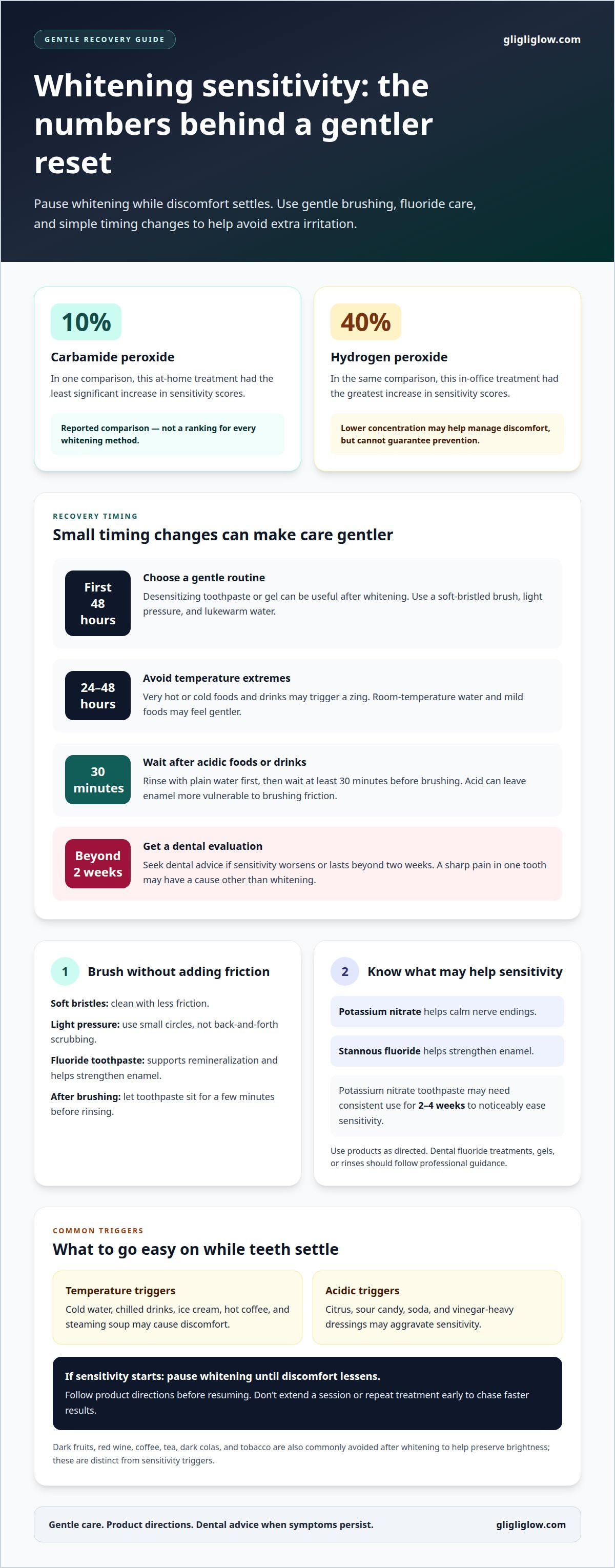
Which whitening methods cause the least sensitivity: strips, trays, or in-office whitening? There isn’t a clear ranking across all three methods. In one comparison, a 10% carbamide peroxide at-home treatment had the least significant increase in sensitivity scores, while a 40% hydrogen peroxide in-office treatment had the greatest increase.
Can a lower peroxide concentration or shorter session prevent sensitivity? A lower concentration may help manage discomfort, but it can’t guarantee prevention. Use whitening products only for the directed session time. Extending treatment can trigger sensitivity.
Another way to ease teeth whitening sensitivity is to consider desensitizing toothpaste. Potassium nitrate helps calm nerve endings, while stannous fluoride helps strengthen enamel. Use the toothpaste as directed and brush gently. Brief “zingers” may occur after whitening; lukewarm water and a gentle routine can help your teeth settle. Seek dental evaluation if sensitivity worsens or lasts beyond two weeks.
2. Tooth remineralization and fluoride toothpaste
Fluoride toothpaste supports remineralization by helping restore minerals and strengthen enamel. That can matter after whitening, when teeth may feel more reactive. Brush gently with a soft-bristled toothbrush, using small circles instead of firm scrubbing. Choose a fluoride toothpaste, and let it sit in your mouth for a few minutes after brushing before rinsing. This gives its ingredients more contact time.
Desensitizing toothpaste may also help, depending on its active ingredients. Potassium nitrate calms nerve endings, while stannous fluoride strengthens enamel. Potassium nitrate toothpaste typically needs consistent application for 2-4 weeks to noticeably ease sensitivity, so don’t expect instant relief from one brushing. Follow the product’s directions and keep your daily routine gentle.
For the first 48 hours after whitening, desensitizing toothpaste or gel can be a useful part of oral care. Fluoride toothpaste and mouthwash can support remineralization and help block pain signals to oral nerves. If beverages or foods trigger discomfort, room-temperature water and mild choices may feel gentler while sensitivity settles.
Some options require dental guidance. A dentist may apply topical fluoride or desensitizing gel, or use fluoride varnish to help manage sensitivity after whitening. For home care, a dentist may recommend a fluoride rinse or gel trays. Prescription desensitizing gels are used daily for a short period, with courses listed as 1-4 weeks. These approaches differ from everyday toothpaste, so use them only as directed by a dental professional.
Keep brushing comfortable and consistent rather than pressing harder for a faster result. If you plan to resume whitening, follow the product directions and take a break if sensitivity returns. For a guided at-home routine, explore the GLI GLI Teeth Whitening Kit and use it as directed.
3. What Causes Teeth to be Sensitive After Whitening?
After whitening, your teeth may react more sharply to certain foods and drinks. Cold water, hot coffee, citrus fruit, and sour candy can trigger sensitivity. Highly acidic foods may add discomfort, so choose mild, non-acidic options while your teeth settle. Room-temperature water and soft foods are gentler choices during recovery.
For 24 to 48 hours after whitening, avoid very hot or cold foods and drinks. That means skipping steaming soup, ice cream, and chilled beverages if they cause a zing. Acidic choices such as citrus juice and soda can also aggravate sensitive teeth. Rinse with plain water after consuming acidic foods or drinks to clear residue.
Wait at least 30 minutes after acidic foods or drinks before brushing. Brushing right away can add friction when enamel is more vulnerable to acid. After eating, rinse with water first, then let the waiting period pass before using your toothbrush. This small timing change can help minimize discomfort without disrupting your regular brushing routine.
During the first few days, limit acidic foods and drinks, including citrus, vinegar-heavy dressings, and fizzy soft drinks. If you have something acidic, rinse with water and wait before brushing. Tobacco, dark fruits, red wine, coffee, tea, and dark colas are also commonly avoided after whitening to help preserve brightness. These are distinct from sensitivity triggers, but avoiding them can help maintain your whitening results.
Should you stop whitening if sensitivity starts? Yes. Take a break until the discomfort lessens, and follow the product directions before resuming. Don’t extend a session or repeat treatment early to chase faster results. If sensitivity worsens or continues beyond two weeks, arrange a dental evaluation, as tooth decay or other dental issues can also cause pain.
4. Causes of sensitivity after whitening
Peroxide is a common cause of temporary sensitivity after teeth whitening. Hydrogen peroxide and carbamide peroxide help whitening treatments remove stains, but can also irritate dentinal tubules beneath the enamel. This irritation can make teeth react to cold air, brushing, or sweet foods. Higher peroxide concentrations can cause greater sensitivity, especially when enamel is already thin or weakened.
How you apply whitening products matters, too. Leaving a product on longer than directed can trigger discomfort, so follow its instructions instead of extending a session. Strips and trays can expose teeth to peroxide; product strength, contact time, and existing sensitivity all affect how your teeth respond. Acidic foods and drinks may add irritation when teeth are already tender.
Timing varies. Sensitivity often peaks within 24-48 hours and gradually improves over 3-7 days. Some people feel discomfort for a few days, while mild sensitivity can take one to two weeks to resolve. In some cases, it may last two weeks or longer. A protective film on teeth may also take a few days to reform after whitening.
Consider causes beyond whitening if pain is sharp, localized, worsening, or persistent. Tooth decay and weakened enamel can contribute, as can defective fillings, crowns, veneers, or bridges. A dentist can assess whether sensitivity is related to whitening or another dental issue. Seek an evaluation if discomfort worsens or continues beyond two weeks.
To counter avoidable irritation, pause whitening when sensitivity appears, then resume only according to product directions once discomfort lessens. If you’re ready to continue an at-home routine, follow the instructions for the GLI GLI Teeth Whitening Kit and avoid lengthening treatment sessions.
GLI GLI
GLI GLI offers at-home whitening options for adults ready to continue their routine once sensitivity has settled. The range includes the GLI GLI Teeth Whitening Kit, Teeth Whitening Gel Refills, Teeth Whitening Pen, and LED Whitening Device. Choose an option that fits your routine and follow its directions carefully. Don’t whiten through ongoing discomfort or extend a treatment beyond the instructions.
If sensitivity keeps worsening or lasts beyond two weeks, seek a dental evaluation before resuming whitening. Once you’re ready to continue, GLI GLI offers products for a convenient at-home whitening routine. Contact the GLI GLI team to learn more about the available options.
Make Your Next Whitening Step Feel More Considered
Your next step doesn’t need to be another treatment. Notice what feels comfortable and use that experience to make a thoughtful choice about your routine. A simple note of when sensitivity appears and what seems to trigger it can help you describe your experience clearly if you seek dental advice.
Knowing how to reverse teeth whitening sensitivity is less about pushing for instant results and more about responding gently to what your teeth are telling you. If you’re unsure how to approach at-home whitening after discomfort, GLI GLI can help you understand its whitening options and their directions. For personalized assistance with your next step, contact GLI GLI for help.
Take it one comfortable step at a time. Your smile deserves care that feels good, too.
Frequently Asked Questions
What Causes Teeth to be Sensitive After Whitening?
Peroxide can temporarily irritate the tiny channels in dentin, making teeth react to temperature, air, or touch. Sensitivity may feel stronger if enamel was already weakened, or if decay or a damaged filling is present. Notice whether discomfort affects several teeth or stays in one spot. This detail can help distinguish a temporary whitening reaction from another dental concern.
Does Tooth Sensitivity from Whitening Go Away?
Whitening-related sensitivity usually eases as teeth recover, though the timeline varies. Track when discomfort starts, what triggers it, and whether it improves from day to day. For example, note whether cold water feels easier to tolerate than it did the previous day. If pain worsens or lasts beyond two weeks, arrange a dental evaluation instead of continuing to whiten.
How do you treat whitening burns?
Stop applying whitening gel if it irritates your gums, and gently rinse your mouth with plain water. A saltwater rinse may help soothe a whitening burn. If excess gel remains on your gums, carefully remove it with a cotton swab. Don’t place pain medication directly on gum tissue, as it can cause a chemical burn. Seek dental care for persistent irritation.
How Does Using a Soft-Bristled Toothbrush Help With Sensitivity?
A soft-bristled brush creates less friction than a firm brush, helping reduce extra irritation during a sensitive spell. Hold it gently and guide the bristles across each tooth without pressing hard. If a particular area hurts, don’t skip cleaning it; use lighter pressure there. A soft brush supports comfortable care but doesn’t treat decay or damaged dental work.
What Are Signs That Sensitivity Requires Professional Attention?
Arrange a dental evaluation if sensitivity worsens, lasts beyond two weeks, or is focused on one tooth rather than spread across several. Visible gum irritation after whitening also deserves attention if it doesn’t settle after rinsing and removing leftover gel. A dentist can look for causes such as decay or a damaged filling, which may need care separate from whitening aftercare.
What Post-Whitening Care Practices Minimize Discomfort?
Choose room-temperature water and soft, mild foods if your teeth feel tender. Rinse with water after acidic foods or drinks, then wait at least 30 minutes before brushing. For example, after citrus or soda, rinse first and let your mouth settle before your usual brushing routine. Keep following the whitening product’s directions, and pause treatment if sensitivity returns.


