


The question “why my dentist doesn't offer whitening” often has a practical answer: the practice may not provide cosmetic treatments, or the dentist may think whitening will not address your type of discoloration. Bleaching can brighten some surface stains, but discoloration inside a tooth, gray-toned teeth, or changes caused by medication or injury may not respond as expected.
Store-bought whitening may seem like an easy next step when you want a brighter smile at home. But the right approach depends on what caused the stains and how your teeth respond. Here’s why a dentist may not offer whitening, which types of discoloration may resist treatment, and what to consider about sensitivity, temporary effects, and over-the-counter products.
Key Takeaways
- A dentist may avoid offering whitening when it isn’t part of the practice or when the discoloration is unlikely to respond well.
- Consider what may be causing the stains: surface pigments can behave differently from discoloration within a tooth or related to medication or injury.
- Store-bought products can take consistent use to show results, and some effects may be temporary. Learn what to watch for before starting.
- Natural tooth color, existing dental work, sensitivity, stain type, and your cosmetic goals can all shape which whitening approach makes sense.
Why professional whitening may not work equally for everyone
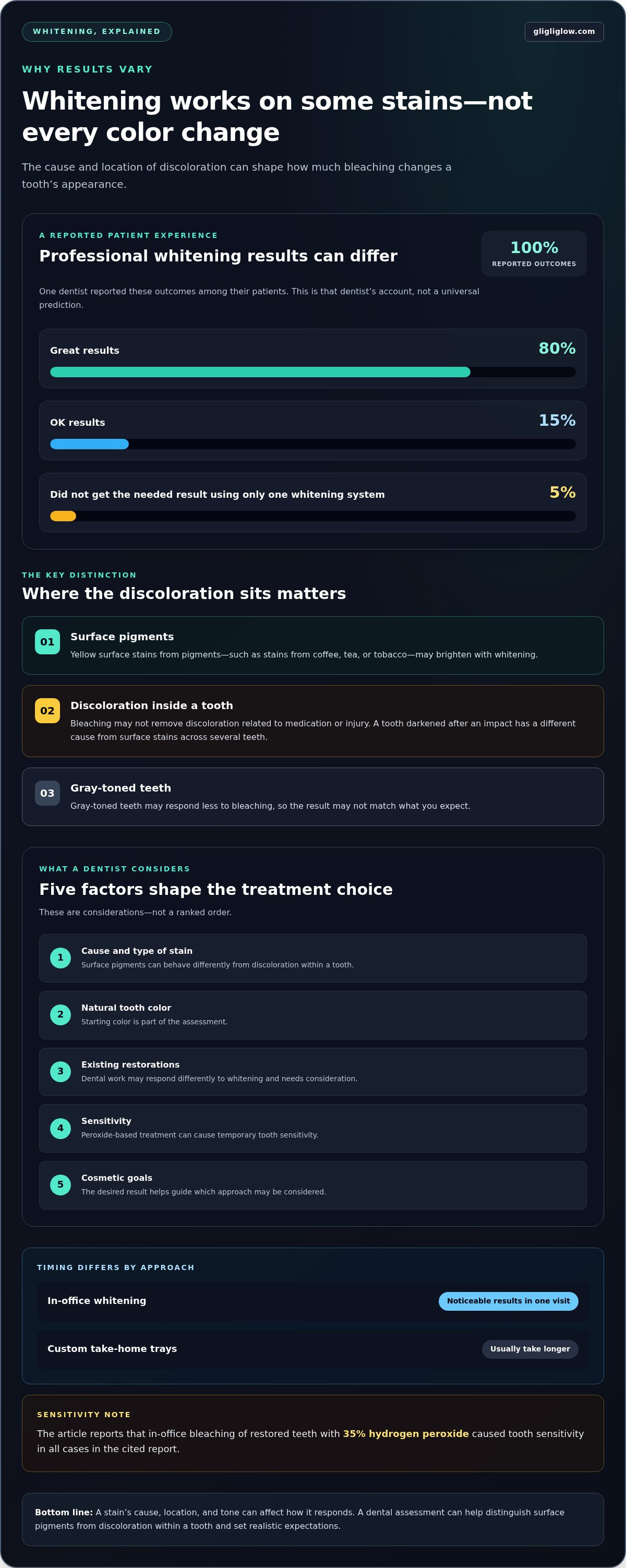
Professional whitening works best when discoloration responds to bleaching. Yellow surface stains from pigments may brighten, while stains inside a tooth can remain. Gray-toned teeth may also respond less. A dentist considers the cause, natural tooth color, existing restorations, sensitivity, and your cosmetic goals before recommending an approach.
Supervision changes how treatment is managed. In-office whitening commonly uses hydrogen peroxide or carbamide peroxide, and a gingival barrier protects the gums from bleaching gel. The dentist can assess the teeth, protect soft tissue, and adjust the plan around restorations or sensitivity. The National Library of Medicine reports that in-office bleaching of restored teeth with 35% hydrogen peroxide caused tooth sensitivity in all cases.
What are the risks and side effects of professional teeth whitening? Peroxide-based treatment can cause temporary tooth sensitivity, and gel may irritate gums if it touches them. Existing restorations also need attention because they may respond differently to whitening. A dental assessment can help identify these factors before treatment.
Do dentists need special training or licensing to provide teeth whitening? Whether a separate whitening credential is required depends on local rules, so there is no single rule that applies everywhere. Check your state dental board’s license lookup to verify a dentist’s license, then review local practice listings for information about whitening.
Professional supervision also helps set realistic expectations. In-office whitening can produce noticeable results in one visit, while custom take-home trays usually take longer. These options differ in both approach and timing, so consider those factors alongside the quoted fee.
Patient experiences also vary within the same treatment approach. One dentist reported that 80% of patients get great results from in-office professional whitening, while 15 % get OK results. The dentist reported that 5% do not get the result they need using only one whitening system, underscoring that a single approach may not suit everyone.
An initial discussion can help set expectations: explain the result you want and ask what options may be considered if the first approach falls short. Whitening is intended to lighten responsive discoloration, not produce an identical change for every smile.
Risks and limitations of over-the-counter whitening
Store-bought whitening may help with mild surface stains from coffee, tea, or tobacco. It is less predictable when discoloration comes from inside a tooth rather than pigments on its surface. Start by considering the likely source of the stain. A bright appearance on the package does not mean every kind of discoloration will respond.
Some products can temporarily make teeth look lighter through dehydration, but that change may not reflect lasting whitening. Give the result time to settle before judging it, rather than treating an immediate shade change as the final outcome. Lighting matters too: compare your smile in similar lighting so changes in your surroundings are not mistaken for changes in tooth color.
Other over-the-counter products use pigment to create a temporary white effect. The pigment can wear off after a few days, so the bright look may fade. Read the packaging to understand what the product does and what effect its directions describe. A temporary cosmetic effect is not the same as bleaching stains.
Patience is part of the process. Over-the-counter whitening may take several weeks of consistent use to produce noticeable results. Follow the product directions, and do not use it more often or longer than instructed. If stains remain unchanged, repeating the same routine may not address their cause.
Before choosing a product, check whether its purpose matches your concern: surface stains, temporary color, or a longer whitening process. Keep expectations tied to that distinction. For a home routine, explore at-home teeth whitening options and compare the product instructions with your needs.
Temporary effects can complicate comparisons: dehydration may make enamel look lighter after whitening, while pigment can create a white appearance without removing stains. That pigment may wear off after a few days. A lighter look at a particular moment is not proof that the underlying tooth color has changed. Consider whether a product creates a temporary visual effect or addresses discoloration, and judge the result after temporary effects have passed.
Discoloration that may not respond to whitening
Whitening works on certain pigments, not every change in tooth color. Yellowing from surface pigments differs from discoloration inside a tooth. For example, a coffee stain on enamel and a tooth darkened after an injury have different causes. Office whitening can target responsive stains, but bleaching does not remove discoloration caused by medication or injury.
A gray tone is another sign that bleaching may not achieve the result you expect. Color can also vary between teeth: one may look darker while its neighbors remain lighter. That pattern differs from an even yellow cast across several teeth. Notice where the color appears and whether it affects one tooth or many before discussing whitening.
Medication-related discoloration can develop inside a tooth rather than as a removable surface stain. Injury can also change a tooth’s color from within. In these cases, repeating an over-the-counter routine or choosing stronger office whitening does not address the cause. The key distinction is location: external pigments sit on enamel, while internal discoloration lies within the tooth.
A dental assessment can help identify that distinction. The dentist can compare the affected tooth with nearby teeth, ask when the color change began, and consider any injury or medication history. These details help determine whether bleaching is suitable. For example, one tooth darkened after an impact calls for a different assessment than several teeth stained by drinks.
If whitening is not suited to the discoloration, ask what may be causing the color and which options address it. Cosmetic or restorative approaches work differently from bleaching, so the appropriate choice depends on the cause and the tooth’s condition. A clear explanation can help you avoid a whitening routine that cannot target the stain you want to change.
Factors that influence whitening treatment choice
Natural tooth color, stain type, sensitivity, restorations, and cosmetic goals all shape whitening choices. The right fit depends on how these factors interact.
Reasons Dentists May Not Offer Whitening
A dentist may not offer whitening because the practice does not provide cosmetic treatments or because another approach better suits your teeth. If you’re wondering why my dentist doesn't offer whitening, ask whether it is because of the practice’s services or your specific dental needs. A dentist may refer you elsewhere for professional whitening if the practice does not provide it.
Conditions That Affect Suitability
Sensitivity, existing restorations, natural tooth color, stain type, and cosmetic goals can all affect the treatment choice. Peroxide-based whitening can cause temporary sensitivity, so tell your dentist about yours before starting. Restorations and discoloration related to medication or injury also matter, since bleaching may not change their appearance as expected. These details help guide the choice between office whitening and take-home trays.
Take-home systems typically need longer to produce their best results. A practice may offer in-office whitening if take-home treatment does not achieve the result you want. The decision depends on your teeth, sensitivity, and preferred outcome; one method does not suit everyone.
Questions to Ask the Dentist
Ask what may be causing the discoloration, whether it is likely to respond to bleaching, and how restorations or sensitivity affect your options. If you’re still wondering why my dentist doesn't offer whitening, ask whether the practice does not provide cosmetic treatment or has a reason to recommend another approach. You can also ask whether the dentist can refer you for professional whitening.
For a home-based option, explore at-home teeth whitening options and review the product directions before choosing.
GLI GLI: GLI GLI Teeth Whitening Kit
The GLI GLI Teeth Whitening Kit offers an at-home option for adults seeking to brighten teeth with responsive surface stains. It is a product-based alternative when in-office whitening is not available through your dental practice. Whitening cannot address every cause of discoloration, so consider the stain type and your dentist’s guidance before choosing a routine.
For an at-home whitening routine, GLI GLI also offers Teeth Whitening Gel Refills, a Teeth Whitening Pen, and an LED Whitening Device. These are separate products. Choose the option that suits the kind of at-home routine you want, and follow its product instructions.
Visit gligliglow.com to explore GLI GLI’s teeth-whitening options.
Choose a Whitening Path That Feels Right for You
Knowing why my dentist doesn't offer whitening can help you decide what to do next. Before choosing a home routine, clarify the result you want and what matters most, such as convenience, guidance, or a gradual approach. A focused question can make the decision simpler: what would help me feel comfortable getting started?
You don’t have to rush into a choice. Take time to consider your priorities, then look for an option that fits your daily routine and expectations. If you’d like to explore GLI GLI’s at-home whitening offerings or discuss which option may suit your goals, contact GLI GLI to discuss whitening.
Your smile is personal. Take a thoughtful next step and choose a path that works for you.
Frequently Asked Questions
Why Not Just Use Store-Bought Whitening?
Store-bought whitening lets you manage a cosmetic routine at home, but it does not identify the cause of a color change. Read the product directions carefully and consider whether the expected result matches your goal. If you are unsure whether whitening is suitable for you, especially with existing dental work, discuss your concerns with your dentist before starting.
How do dentist-provided whitening and over-the-counter products compare?
Dentist-provided whitening can include an assessment and a tailored approach, such as in-office treatment or custom whitening trays. Over-the-counter products are used independently according to their directions. The practical difference is the level of professional guidance: consider whether you prefer an individual assessment or a self-directed routine, then choose based on your dental needs and expectations.


