


The best way to whiten between teeth is to use a peroxide-based whitening product exactly as directed alongside consistent brushing and flossing. Surface stains can collect in narrow spaces, so whitening works best with a routine that clears food residue and plaque. Brush twice a day and floss once a day.
Coffee, tea, red wine and dark berries can contribute to staining, but not all discoloration is on the tooth surface. Some changes occur beneath it, where whitening may work differently. Here’s what can cause stains between teeth, how peroxide whitening works and how to combine whitening with everyday oral care. A few practical habits can support a brighter-looking smile without making your routine a chore.
Key Takeaways
- Learn to distinguish surface stains from discoloration that may need a different approach.
- Understand how peroxide-based whitening works and why following product directions matters.
- See how everyday oral care can complement whitening and help manage new surface stains.
- Find out what whitening strips can reach between teeth and where their limits may show.
What causes stains between teeth?
Brown stains between teeth can result from colored foods and drinks, tobacco, or plaque that hardens into tartar. Coffee, tea and red wine leave pigments on tooth surfaces, especially in narrow gaps a toothbrush may miss. Dark berries can contribute too. Rinsing with water after eating or drinking them helps limit pigment contact with teeth.
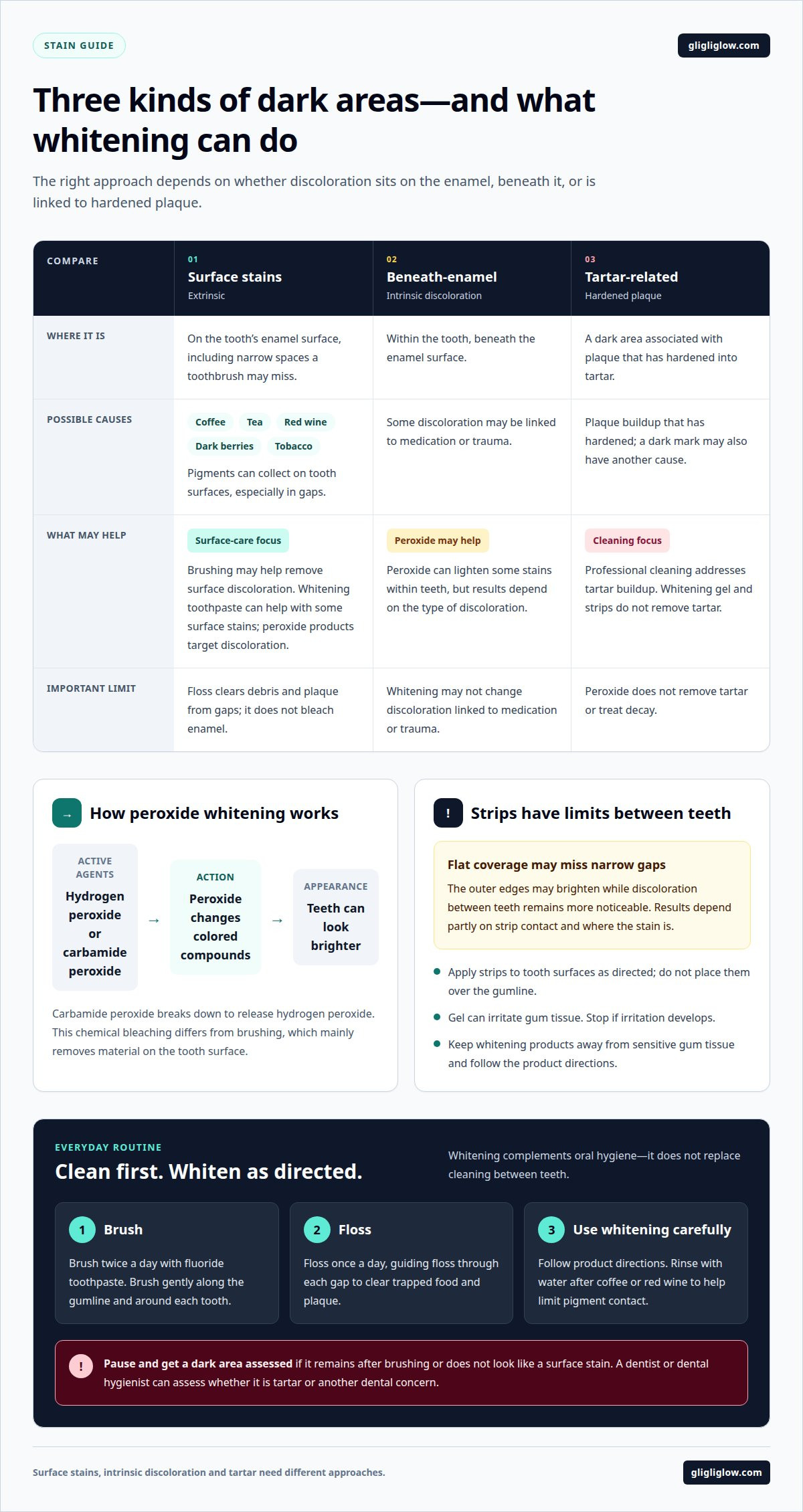
Extrinsic stains sit on the enamel’s surface; intrinsic stains form beneath it. The distinction matters: brushing may help remove surface discoloration, while whitening may not change discoloration linked to medication or trauma. A brown mark can also be associated with plaque or tartar. Tartar-related stains may need professional cleaning rather than peroxide.
Build stain-conscious oral care around brushing twice a day and flossing once a day. Brush gently along the gumline and around each tooth, then guide floss through each gap to clear trapped food and plaque. This helps reduce buildup, but floss does not bleach enamel. Rinsing with water after coffee or red wine is another simple step.
Can whitening toothpaste or floss whiten between teeth? Whitening toothpaste may lighten some surface stains, but floss removes debris rather than changing tooth color. Peroxide products work on discoloration; they do not remove tartar or treat decay. If a dark area remains after brushing, get it assessed instead of repeatedly whitening it.
How much does professional teeth whitening cost in the United States? A dark spot may be tartar or decay, so have a dentist or dental hygienist assess it before treating it as a stain.
What are the risks of whitening between teeth? Whitening gel can irritate gum tissue if it touches the gums, and strips can cause irritation when placed over the gumline. If you have sensitive teeth or gums, discuss whitening options with a dental professional before using peroxide.
How peroxide whitening agents work
Most teeth-bleaching products use hydrogen peroxide or carbamide peroxide as active agents. Carbamide peroxide breaks down to release hydrogen peroxide. Peroxide molecules move into enamel and change colored compounds, which can make teeth look brighter. This chemical bleaching differs from brushing, which mainly removes material on the tooth surface.
The best method depends on where the discoloration sits. Peroxide can lighten some stains within teeth, while whitening toothpaste mainly helps with surface stains through polishing ingredients. Neither brushing nor bleaching removes tartar. A professional cleaning addresses tartar buildup, so whitening gel is not a substitute when hardened deposits cause a dark area.
Are whitening pens or trays effective for between-teeth stains? They can apply gel to tooth surfaces, including near gaps, but coverage depends on contact and fit. A dentist can make custom trays, while a pen allows more precise gel placement. Follow the product directions and keep gel away from sensitive gum tissue.
Can a dentist whiten stains between teeth with professional treatment? Yes. A dentist can assess the stain and use professional bleaching agents, with protective tools or products to shield gums from stronger chemicals. In-office whitening can produce noticeable results in a single session, but tartar-related marks need cleaning rather than bleaching.
Diluted hydrogen peroxide rinses are sometimes used for whitening, but concentration matters. Do not guess a dilution or use household peroxide as a mouth rinse. Choose a rinse formulated for oral use and follow its label. If it directs you to rinse with hydrogen peroxide, rinse with water afterward as instructed.
How should whitening strips be applied to reach between teeth safely? Press each strip against the tooth surfaces as directed, without placing it over the gumline. Strips may not fit every gap closely, and their gel can irritate gum tissue. Stop using them if irritation develops, and ask a dental professional about persistent sensitivity.
Combining whitening products with oral hygiene
Whitening works best as part of a dental hygiene routine, not as a replacement for cleaning between teeth. Brushing and flossing help disrupt plaque, while whitening products target discoloration. If plaque hardens into tartar, strips and bleaching gel will not remove it. A dental cleaning can clear tartar and surface stains before you assess the remaining tooth color.
Choose whitening toothpaste for surface stains, and look for the ADA Seal of Acceptance when selecting one. The American Dental Association recommends whitening toothpastes with special chemicals and polishing agents for stain removal. These toothpastes generally use abrasives to polish away surface stains; some also contain bleaching agents. Follow the product label rather than applying it more often to speed results.
Whitening toothpaste may show visible changes when used two to three times daily for three to six weeks. That schedule is for toothpaste use, not a reason to combine several whitening products at once. If you also use strips or a peroxide product, follow each product’s directions and avoid overlapping applications. This keeps your routine clear and makes irritation or sensitivity easier to notice.
Carbamide peroxide and hydrogen peroxide bleach tooth discoloration; toothpaste mainly helps remove surface stains. Neither replaces brushing along the gumline or cleaning the narrow spaces where plaque gathers. Tobacco can also contribute to staining, so reducing exposure limits a recurring source. After whitening, keep your usual hygiene routine steady rather than brushing harder, which will not make bleaching work faster.
For a simple routine, brush with fluoride toothpaste, floss carefully between each tooth and use whitening products only as directed. Keep whitening gel away from sensitive gum tissue. If a dark area remains after cleaning, or a change does not look like a surface stain, pause bleaching and arrange a dental assessment. A dentist can distinguish discoloration from tartar or another dental concern.
Do whitening strips reach between teeth effectively?
Whitening strips cover the front surfaces of teeth, but their flat shape may not reach every narrow gap. The outer edges can brighten while discoloration between teeth remains more noticeable. Results depend partly on how closely the strip contacts each tooth, where the stain is and whether it is a surface stain that peroxide can bleach.
Over-the-counter whitening products used for stains between teeth can show results after 1-2 weeks. Whitening strips are typically applied daily for 5-30 minutes over 1-2 weeks. Those ranges describe different product directions, so use the timing printed on the specific product rather than combining schedules or extending wear time.
Placement matters. Align the strip across the teeth it is designed to cover, then smooth it against each tooth surface without pulling it over the gumline. Strip gel can irritate gum tissue if it touches the gums. Do not cut or reshape strips unless the directions allow it, and do not use extra strips to force gel into a gap.
Results can look uneven when gaps are deep, teeth overlap or the stain sits on a surface the strip does not contact. Strips do not remove tartar, and bleaching does not change the color of dental restorations such as crowns, veneers, implants or porcelain fillings. If a dark mark stays limited to one gap, do not assume stronger or longer strip use will solve it.
For a safe routine, follow the label’s wear time and frequency, keep gel off your gums and stop if irritation develops. Continue brushing and flossing as usual, since strips do not replace daily oral care. If you have sensitive teeth or gums, or the discoloration persists despite correct use, discuss whitening options with a dental professional before trying another bleaching method.
Medication- or trauma-related discoloration may not respond to bleaching. Over-the-counter products may be as effective as professional products but can require more applications. Keep strips off the gumline because gel may irritate gum tissue. Strawberries and oranges contain sugars and acids that can strip enamel and worsen discoloration.
GLI GLI
GLI GLI offers at-home whitening options for people who want to add peroxide whitening to a consistent oral-care routine. The range includes the GLI GLI Teeth Whitening Kit, GLI GLI Teeth Whitening Gel Refills, GLI GLI Teeth Whitening Pen and GLI GLI LED Whitening Device. These formats can fit into your whitening routine, while brushing and flossing remain essential for cleaning between teeth.
Choose whitening products for tooth discoloration, not to remove tartar or treat a dark area that may need dental attention. Follow the directions for the specific product you use, and pause whitening if irritation develops. If you’d like help learning more about GLI GLI’s at-home whitening options, contact GLI GLI.
Choose a routine that feels sustainable
The best way to whiten between teeth is to follow a routine that suits your needs and is easy to use correctly. Before choosing your next step, consider what you want to improve and whether your current approach feels comfortable. Whitening does not need to become a race toward a particular shade. A steady, thoughtful routine can help you make confident choices and keep oral care part of everyday self-care.
If you’re ready to explore your options or have questions about at-home whitening, contact GLI GLI for help. Take the next step at your own pace, and give your smile the care that feels right for you.
Frequently Asked Questions
What is the Best Way to Whiten Teeth?
The right approach depends on the type and depth of discoloration. For stubborn or deep-set stains, professional whitening is generally more effective than over-the-counter products. For surface discoloration, whitening toothpaste or a peroxide product used as directed can be a practical option. Before choosing, consider whether the color change affects natural teeth or restorations, since bleaching does not whiten crowns, veneers or implants.
Can brown stains on teeth be removed?
Yes, brown stains can often be reduced, but the right method depends on their cause. A brown deposit that feels rough may be tartar, which whitening products will not remove; professional cleaning can address the buildup. Surface discoloration from drinks or tobacco may respond to whitening toothpaste or peroxide treatment. If a mark is isolated, persistent or appears alongside tooth damage, have it assessed before applying whitening gel.
What causes stains between teeth and can whitening remove them?
Dark drinks, tobacco and plaque buildup can leave discoloration between teeth, where brushing may not reach thoroughly. Peroxide whitening can lighten some discoloration on natural teeth, but results depend on whether the stain is on the enamel or beneath its surface. For example, a mark caused by tartar needs cleaning, not bleaching. A dental assessment can help distinguish a stain from decay or another concern.
What is the most effective way to whiten between teeth at home?
For the best way to whiten between teeth at home, pair a peroxide product used as directed with careful daily brushing and flossing. Whitening strips may not contact every narrow gap, so uneven coverage can leave some areas darker. Do not apply extra gel or extend wear time to compensate. If sensitivity develops or one dark spot remains, pause whitening and seek dental advice.


