


A brighter smile in your 40s starts with protecting your enamel, not chasing an unnaturally white shade. If you’re wondering how to get a brighter smile in your 40s, begin with steady daily care: brush twice a day with a soft-bristled toothbrush and floss once daily. Enamel can thin with age, revealing the more yellow dentin beneath, while professional whitening results can last several years with proper maintenance.
That change in tooth color can feel frustrating, but small, consistent habits make a meaningful difference to your smile’s freshness. Brush gently, and after acidic food or drinks, wait at least 30 minutes before brushing to give enamel time to recover. In this guide, you’ll learn how enamel thinning, everyday tooth wear, and discoloration affect brightness, plus how brushing and flossing support a cleaner-looking smile and help maintain whitening results. A little care, repeated daily, can become a feel-good ritual that helps you smile with more confidence. ✨
Key Takeaways
- Learn how clenching, grinding, and everyday chewing can gradually change tooth shape, and when a nightguard may help protect against further wear.
- See why older fillings or bonding may stand out more as tooth color changes over time.
- Fine-tune your brushing technique with light pressure and a soft-bristled brush angled along the gumline.
- Understand how surface stains and consistent maintenance can affect the brightness and staying power of whitening results.
1. Age-related enamel thinning and dentin exposure
In your 40s and 50s, thinner enamel can reveal the yellowish dentin beneath, making teeth look darker. Enamel also protects teeth from acid and wear, so preserving it supports both a brighter smile and everyday oral health. A change in color can reflect this underlying structure, not just surface stains.
Care for enamel with a soft-bristled toothbrush and gentle pressure. Brush twice a day, floss once daily, and wait at least 30 minutes after acidic food or drinks before brushing. Sugary and starchy foods feed mouth bacteria, which produce acids that erode enamel and contribute to tooth decay. Water after meals and mindful snacking help limit repeated acid exposure.
Clenching, grinding and chewing can flatten or shorten teeth over time. If you grind your teeth, a dentist can assess whether a nightguard may help protect enamel. Cosmetic bonding can smooth small irregularities, while veneers can reshape worn or uneven teeth. Personalized dental care takes tooth structure, facial features and your goals into account. Clear aligners address tooth position, not enamel loss; bridges replace missing teeth rather than whiten them.
In-office whitening is carried out at a dental practice, while take-home trays let adults apply whitening treatment at home. The methods and application differ, so a dentist can explain which approach may suit your teeth.
There is no single professional whitening cost across the United States. The total depends on the treatment method, the extent of staining and whether dental issues need attention first.
For a natural, enamel-conscious approach, brush and floss regularly, limit frequent sugary or acidic snacks, and avoid abrasive home remedies. These habits support oral health, but they do not change dentin’s natural colour.
Whitening may cause sensitivity or gum discomfort. Follow product directions and discuss sensitivity with a dentist before choosing a treatment.
Crowns, veneers, fillings and implants do not whiten like natural teeth. Whitening can change the colour of natural teeth without changing existing restorations, so ask a dentist to plan around them.
Yes. See a dentist before whitening if you have gum disease, cavities or sensitive teeth. Addressing oral-health problems first helps guide a safer, personalised plan.
2. Age-related tooth wear and discoloration
Tooth shape can change gradually through everyday chewing, clenching, or grinding. Over time, these forces may leave teeth flatter or shorter, changing the balance of your smile. Compare the edges of your front teeth in a mirror: wear may appear as flattened tips, uneven outlines, or small chips. This differs from a color change, so first identify what you’d like to improve. Learning how to get a brighter smile in your 40s starts with noticing whether your concern is shade, shape, or both.
Tooth colour can also look less even as teeth change. Altered enamel may make older fillings or bonding more noticeable if their shade no longer blends with nearby teeth. For example, a restoration that once matched may stand out beside a tooth that has darkened. Mention any visible mismatch at a dental consultation, especially if the tooth’s function or comfort has changed.
Take a gentle, step-by-step approach. Consider whether grinding or clenching could be flattening your teeth. A dental professional can assess wear and discuss suitable options, rather than treating every appearance difference with whitening. Whitening cannot reshape a worn edge, so understanding the cause helps you choose a useful next step.
Age-related changes don’t mean every smile needs cosmetic treatment. If tooth position affects appearance, orthodontic aligners may be discussed as a separate option; they address alignment, not tooth color or worn enamel. A personalized plan should distinguish those goals and consider oral health and function alongside appearance. That clarity can help you decide how to get a brighter smile in your 40s without expecting one treatment to solve unrelated concerns.
Whitening results can last several years with proper maintenance, but maintenance won’t restore lost tooth structure. If you’re considering an at-home option for natural tooth color, explore at-home teeth whitening options as one part of a thoughtful smile-care routine.
3. Daily brushing and flossing
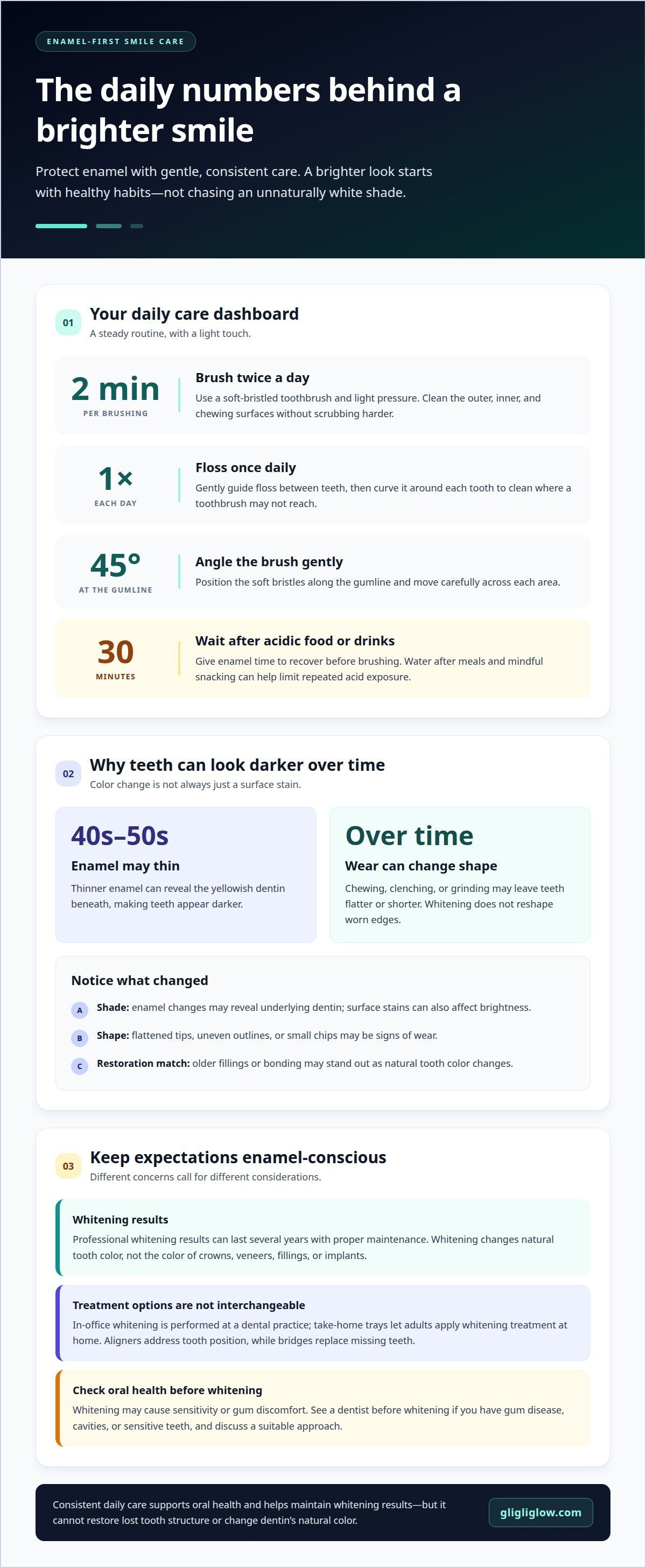
Build your routine around two minutes of brushing, twice daily. Choose a soft-bristled toothbrush and use light pressure at a 45-degree angle along the gumline. Move carefully across the outer, inner, and chewing surfaces, giving each area attention instead of scrubbing harder. If you're wondering how to get a brighter smile in your 40s, this steady routine is a practical place to begin.
Floss once a day, ideally at night, to clean between teeth where a toothbrush cannot reach. Guide the floss gently between each pair of teeth, then curve it around each tooth instead of snapping it against your gums. This helps remove plaque from areas your brush may miss. If braces or other dental work make cleaning trickier, take care around each space and follow the cleaning guidance for your treatment plan.
Adults with crowns or implants should keep brushing and flossing around their natural teeth and restorations. Use a gentle touch at the gumline and clean carefully where each restoration meets the surrounding area. Daily care supports oral health, but it does not change the shade of crowns or implants. Keeping this distinction in mind helps set realistic expectations as you build a confident smile-care routine.
Consistency matters more than adding extra brushing sessions. Stick with the twice-daily, two-minute routine and once-daily flossing, then keep up with dental checkups. Routine visits can identify areas that need attention and support personalized oral-care advice. If orthodontic treatment or braces are part of your care, maintain the same daily rhythm and clean carefully around appliances. A practical answer to how to get a brighter smile in your 40s is to make these small steps part of your everyday routine.
4. What causes teeth to look yellow or dull in your 40s?
Color changes often have more than one cause. In your 40s and 50s, thinner enamel can reveal yellowish dentin underneath, creating a deeper shade even when the tooth surface is clean. Surface stains may also collect over time, making teeth look less bright. These changes can happen together, so the appearance you notice doesn’t always point to one cause.
Look for patterns to understand the difference. A similar shift across several teeth may reflect gradual colour change or surface staining. A single tooth that changes noticeably, especially over a few weeks, warrants prompt dental evaluation. Tooth colour can be a cosmetic concern, but a sudden change may also come with a change in comfort. Pay attention to both rather than treating every dull-looking smile as a whitening issue.
Wear can affect brightness, too. Clenching, grinding and everyday chewing may leave teeth flatter or shorter, changing how light reflects from their edges. Gum recession can expose more of the teeth, making them look longer and increasing sensitivity. These changes can alter your smile’s appearance even without new stains. A dentist can distinguish changes in shape, gum position and tooth colour during an examination.
Older fillings or bonding may stand out more as enamel changes, because their shade may no longer match nearby teeth. Whitening affects natural tooth colour, not the colour of restorations, so the contrast may become more noticeable. Note which teeth look dull, whether restorations appear mismatched and whether the change comes with sensitivity. These observations help clarify what improvement you are looking for.
Professional whitening can lift surface stains, while daily care helps maintain a cleaner-looking smile. The right approach depends on whether the main concern is staining, exposed dentin, tooth wear, or visible dental work. For an at-home whitening option, explore teeth whitening options as part of a considered smile-care routine.
GLI GLI
GLI GLI offers at-home teeth whitening options for adults who want to address surface stains as part of their smile-care routine. The range includes the GLI GLI Teeth Whitening Kit, GLI GLI Teeth Whitening Gel Refills and GLI GLI Teeth Whitening Pen. Choose an at-home whitening option that fits your routine, and follow its directions carefully.
Whitening works on natural teeth, not crowns, fillings, veneers or implants, and it will not restore enamel or reshape worn edges. If you have sensitive teeth, cavities or gum disease, speak with a dentist before starting whitening. For a sudden change in tooth colour or comfort, arrange a dental evaluation rather than relying on cosmetic care alone.
Ready to explore at-home whitening? Contact GLI GLI to learn more about its teeth-whitening options.
Make your next smile-care choice with confidence
Your next step can be simple: decide what you would like to feel more confident about when you smile. Is it the shade you see in photos, how your teeth look in conversation, or having a routine that feels easy to maintain? A clear personal goal can help you choose care that suits your priorities, rather than chasing an ideal that does not feel like you.
If you’re still considering how to get a brighter smile in your 40s, give yourself room to make an informed choice. Keep your daily care consistent, and choose whitening with your own comfort and expectations in mind. There’s no need to rush into a change. Your smile-care routine can be a small act of self-care that fits naturally into your day.
Ready to talk through your next step? Contact GLI GLI to discuss your smile. Keep it personal, keep it gentle, and move toward a smile that feels like yours. ✨
Frequently Asked Questions
How long do results last?
Professional whitening results can last several years with proper maintenance. The shade may fade sooner as new surface stains build up, so everyday habits matter after treatment. Keep your oral-care routine consistent and follow any maintenance advice for your whitening method. Remember that whitening changes natural tooth colour, not the shade of crowns, fillings or implants.
How many treatments do I need?
There isn’t one treatment count that applies to every person or whitening method. For an at-home kit, the product’s use instructions define the session schedule: the kits described by GLI GLI contain two gels, each providing 10-15 uses, for 20-30 sessions total. That’s the kit’s capacity, not a recommendation that everyone needs every session. Follow the directions, and speak with a dentist before whitening.
What Actually Changes in Your Smile Around 40?
Gum recession can expose more of a tooth, making it appear longer and increasing sensitivity. Teeth may also continue to erupt slightly, while facial features continue subtle growth into the 40s and 50s. These changes can alter how your smile looks, even without a new stain. Note whether the change affects one tooth or several, and whether sensitivity or discomfort appears too.
How effective are whitening toothpastes, strips, and rinses?
Whitening toothpastes, strips and rinses come in different formats, so use each according to its own directions rather than combining them casually. Toothpaste fits into routine brushing, while strips and rinses are separate whitening products. Visible results depend on the type of discolouration and the product directions. If you have sensitive teeth or existing dental concerns, talk with a dentist before starting any whitening treatment.
How long do teeth whitening results last, and how can they be maintained?
At-home whitening results do not have one fixed lifespan: new staining and your maintenance routine affect how long the shade stays noticeable. Follow the product directions, keep up daily oral care and do not add sessions beyond the recommended use. If the colour fades, use the product instructions to guide any repeat use, and ask a dentist about changes accompanied by discomfort.
What is the difference between professional in-office whitening and take-home trays?
In-office whitening is carried out at a dental practice, while take-home trays let you apply whitening treatment at home. The methods and application differ.


