


If you want to improve my smile without a dentist, start with simple daily habits rather than a dramatic DIY fix. A consistent care routine can help your teeth look cleaner, while at-home whitening may lighten some stains. The right approach depends on whether your goal is a cleaner look, a brighter tooth colour, or a change that at-home care cannot make.
Brushing and cleaning between teeth help remove everyday buildup. Whitening changes the appearance of tooth colour, not tooth shape or alignment, and it does not treat underlying dental problems. Results vary, and using a product more often than directed will not guarantee a better result. Filing teeth or trying other risky DIY tricks can cause harm.
This guide covers a practical daily routine, how at-home whitening works, and what to consider if you are concerned about sensitivity. It also explains when symptoms such as pain or swelling call for professional attention. At-home care can help with appearance, but it has limits.
Key Takeaways
- To improve my smile without a dentist, first identify whether your goal is a cleaner look or a change at-home care cannot address, such as tooth shape or alignment.
- Surface stains and changes in a tooth’s underlying colour may respond differently to everyday care and whitening.
- Compare brushing, whitening toothpaste, strips, and LED gel kits by their purpose, directions, and how they fit your sensitivity concerns.
- Create a simple daily routine and make stain-aware choices without unnecessarily avoiding foods or drinks you enjoy.
- The Sparkle Booster Teeth Whitening Kit is an option for a tooth-colour goal. Dental concerns such as pain, swelling, or sudden changes need professional attention.
How to Improve Your Smile Without a Dentist: What Can You Change at Home?
You can make your smile look cleaner at home, but start by matching the method to the concern. Consistent brushing and cleaning between teeth remove everyday buildup. Stain-aware habits may help limit new surface discolouration. Whitening products can lighten some stains, but they will not reshape teeth, change their alignment, or replace missing teeth. These are appearance-focused options, not a way to diagnose or treat a dental problem.
If you are asking, “How can I improve my smile without a dentist?”, identify what you want to change: cleanliness, colour, or something about a tooth’s structure. That distinction sets realistic expectations and helps you choose a sensible first step. At-home care can support a fresh-looking smile, but it cannot explain why a tooth has changed or rule out an underlying concern.
Which smile concerns can everyday care help with?
Daily brushing helps clear plaque and food debris from tooth surfaces. Cleaning between teeth reaches spaces a toothbrush may miss. Together, these habits support a clean-looking smile. Tea, coffee, and tobacco can contribute to surface staining. Being mindful of exposure and rinsing with water after staining drinks may help limit new marks without cutting out foods or drinks you enjoy.
What can you realistically change without a dentist?
Some discolouration sits on the tooth surface and may respond to cleaning or whitening. Other colour changes arise within the tooth, while chips, uneven edges, and alignment are structural concerns. You can explore understanding tooth whitening for an overview of whitening approaches and potential side effects, but a home routine cannot diagnose the cause of a change.
What you see after at-home care depends on the cause of the discolouration and your starting tooth shade. A routine may leave teeth feeling cleaner without noticeably changing their colour. Whitening may lighten some stains, but results are not the same for everyone. Keep expectations focused on colour and surface appearance, not a complete smile makeover.
- For a cleaner look: brush consistently and clean between your teeth.
- For surface stains: consider stain-aware habits and suitable whitening options.
- For shape, alignment, or missing teeth: home care cannot make that structural change.
Keep one boundary clear: pain, swelling, bleeding, or a sudden change in a tooth or your mouth calls for dental advice. Do not try to cover up a new symptom with whitening or assume a home routine will treat its cause. At-home care is most useful when your goal is appearance and there are no concerning symptoms. If something feels wrong, professional guidance comes first.
Why Teeth Look Dull or Stained, and What At-Home Care Can Address
A dull-looking smile can have different causes. A film or stain on the tooth’s outer surface is different from a colour change that comes from deeper within it. Tea, coffee, and tobacco can contribute to surface staining, but appearance alone cannot identify the cause of a particular mark. Think of whitening as a cosmetic option, not a way to find or fix a dental problem.
Surface stains and deeper colour changes are not the same
Surface stains appear on the outside of teeth. Regular brushing and cleaning between teeth help remove everyday buildup, and whitening products may lighten some discolouration. Deeper colour changes may respond differently, so do not assume every tooth will brighten by the same amount or reach a uniform shade. The source of discolouration affects what whitening can change.
If you are considering whitening, the American Dental Association’s guidance on teeth whitening offers information about safety and efficacy. Sensitivity matters too: whitening may make teeth feel temporarily sensitive for some people. Follow the product directions, do not use more than directed, and stop if discomfort develops rather than pushing through it.
When a colour change may need more than a cosmetic routine
A sudden colour change, a change affecting one tooth, or a change with no clear explanation is a reason to seek dental advice. The same applies to pain or sensitivity that is persistent, worsening, or interfering with eating and drinking. These symptoms can have causes beyond staining, and a whitening routine cannot determine what is going on.
Keep the goal in perspective. Whitening changes the appearance of tooth colour. It does not repair chips, correct alignment, or treat cavities, gum problems, or injuries. If a tooth looks different after an impact, or a colour change comes with swelling or bleeding, pause cosmetic care and get professional guidance. Addressing the cause matters more than masking the appearance.
For a gradual, appearance-focused approach, match your next step to your concern. Everyday care supports a clean-looking smile, while whitening targets tooth colour and results vary. If colour is your main goal, explore GLI GLI teeth-whitening products. Keep new or uncomfortable symptoms separate from cosmetic choices, and do not use whitening as a substitute for dental advice.
At-Home Smile Options Compared: Brushing, Whitening Toothpaste, and Whitening Kits
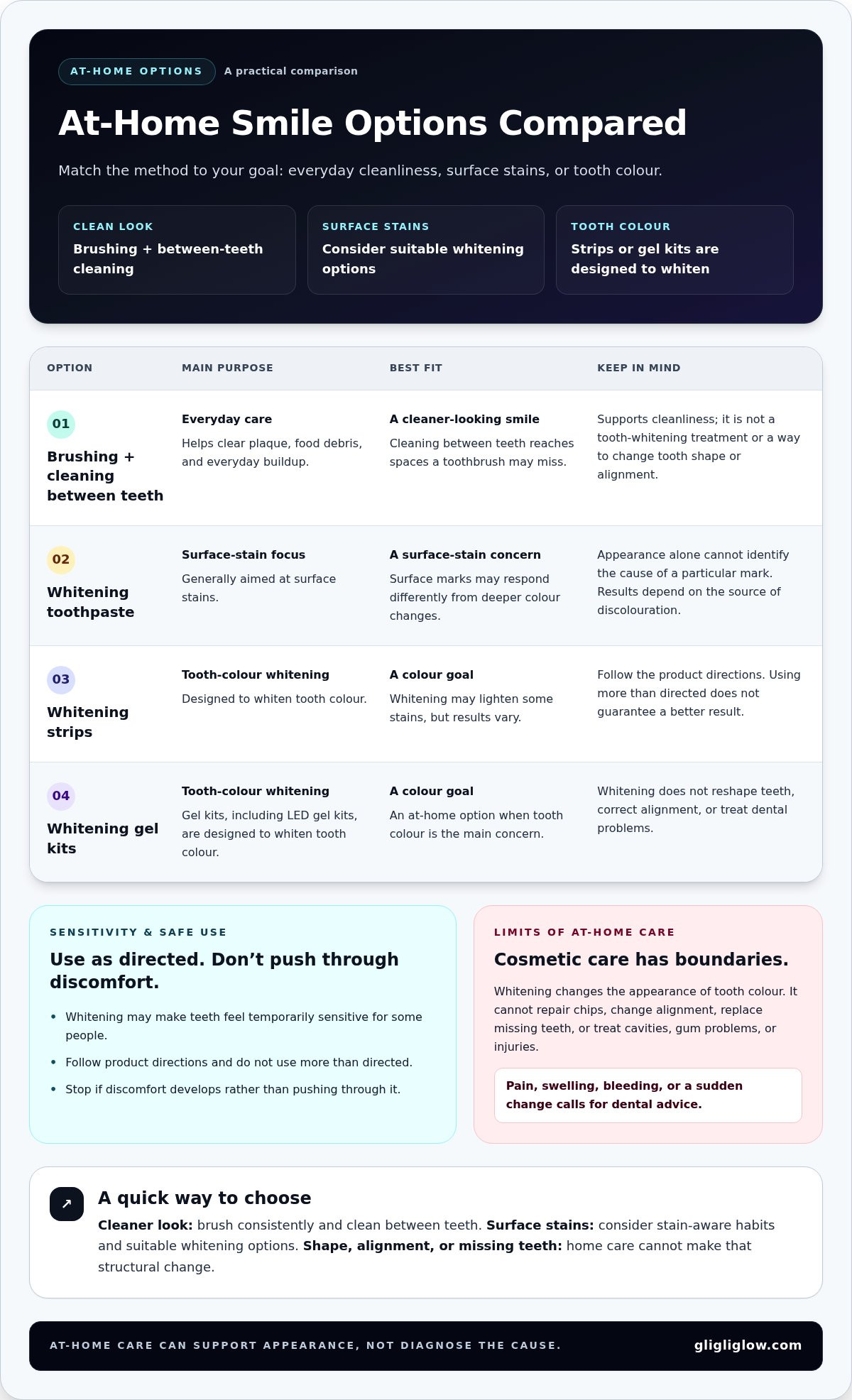
Choosing an at-home option gets easier when you begin with your goal. Brushing and cleaning between teeth are everyday care, not whitening treatments. Whitening toothpaste is generally aimed at surface stains, while strips and gel kits are designed to whiten tooth colour. None can repair chips, change alignment, or replace a missing tooth. If you want to improve my smile without a dentist, choose a product for the change you are hoping to see.
| Option | Main purpose | Practical use | Limits and sensitivity |
|---|---|---|---|
| Regular oral care | Clean teeth and support daily maintenance | Brush consistently and clean between teeth | Won’t reliably change natural tooth colour; use a gentle technique if gums or teeth feel tender |
| Whitening toothpaste | Help remove some surface stains | Use as directed as part of your brushing routine | Not intended to change natural tooth colour beyond its stain-removal role; stop if it causes notable discomfort |
| Whitening strips | Whiten tooth colour | Apply according to the product instructions | Results vary; whitening may cause sensitivity for some people |
| LED gel kits | Apply whitening gel as part of an at-home routine | Follow the kit’s directions for gel and device use | Results vary, and sensitivity is possible; do not exceed the stated use instructions |
Which at-home option fits your main goal?
For a cleaner-feeling smile and day-to-day upkeep, begin with regular oral care. If your concern is surface staining, whitening toothpaste may help with that specific goal, but do not expect it to change your underlying tooth shade. Strips or a gel kit may suit someone focused on tooth colour. This at-home teeth whitening kit guide can help you understand kit formats before choosing.
How to weigh convenience, sensitivity, and realistic results
Think about how each format fits your routine. Toothpaste is used while brushing; strips and gel kits require you to follow their specific application directions. Convenient does not mean suitable for everyone, and a popular format is not automatically the right match. Check how often to use the product, how long to apply it, and any warnings on its packaging. Do not combine whitening methods or use them more often than directed to chase a faster change.
Sensitivity can affect both your choice and your comfort. If a product causes significant discomfort, stop using it and seek dental advice rather than immediately trying another whitening product. A gradual, realistic approach is better than pushing through pain. Compare the format and directions with your main goal, then give the product time to work as instructed.
A Simple At-Home Routine for a Brighter-Looking Smile
A smile-care routine works best when it is easy enough to repeat. Start with everyday care, then add stain-aware habits that fit your life. Whitening is optional and makes sense only when tooth colour is your goal. Consistent oral care helps maintain a clean-looking smile, but it will not reverse every stain or address a dental problem.
Build a low-fuss daily smile-care routine
Keep the basics steady rather than chasing a complicated routine. Make brushing and cleaning between teeth regular habits, and treat whitening as a separate, optional step. If tea or coffee is part of your routine, rinsing with water afterward is a practical way to clear lingering drink residue. You do not need to avoid foods or drinks you enjoy.
- Brush consistently. Make brushing part of your morning and evening rhythm. Use a gentle technique and take time to clean tooth surfaces rather than scrubbing hard. If brushing feels uncomfortable, do not increase pressure to try to make teeth look brighter.
- Clean between your teeth. Add an interdental cleaning step to help clear food debris and buildup from spaces a toothbrush may not reach. Choose a method you can use comfortably and regularly.
- Stay mindful of staining. After a staining drink, rinse with water when practical. This is a small habit, not a promise to prevent or remove every stain. Enjoy your usual food and drinks without turning smile care into a list of restrictions.
- Decide whether whitening fits your goal. If tooth colour is what you would like to change, read the directions for the specific product you choose. Do not combine methods or exceed the product’s stated limits to try to speed up results.
- Keep the routine manageable. Pick a simple pattern you can maintain. Everyday care supports cleanliness; whitening products target colour. Neither can reshape teeth or correct alignment.
Know when to pause home whitening and seek advice
Whitening should not feel like something you have to push through. Stop using a product if notable pain or irritation develops. Persistent sensitivity, bleeding, swelling, or an unexplained change in your teeth or gums deserves dental advice. If symptoms are urgent or getting worse, do not try to manage them with cosmetic products.
For the GLI GLI Teeth Whitening Kit, follow its product directions, including the limit of one use per day. Its LED device automatically shuts off after 20 minutes; that feature is not permission to use it more often. If tooth colour is your focus, explore GLI GLI teeth whitening options. Keep everyday care consistent and let comfort guide your next step.
Try GLI GLI at Home When Tooth Colour Is Your Main Smile Goal
If you want brighter-looking tooth colour, an at-home whitening kit may be worth considering. The Sparkle Booster Teeth Whitening Kit is designed for an at-home whitening routine. It is not a dental treatment. Whitening will not change tooth shape or alignment, replace a missing tooth, or address the cause of pain or other symptoms. If you are exploring how to improve my smile without a dentist, first make sure colour is the concern you want to focus on.
What comes with the Sparkle Booster Teeth Whitening Kit?
The kit brings its whitening components and instructions together in one set. It includes:
- One LED Whitening Device and one protective case
- Two 5 ml PAP Gel syringes
- One 2 ml Remineralization Pen, intended to help reduce sensitivity
- One Type-C charger, one shade guide, one thank-you card, and one user manual
The shade guide can help you observe colour changes, and the user manual provides product directions. The kit supports an at-home whitening routine, but it does not diagnose dental concerns or treat tooth or gum problems. Its components cannot make structural changes to your smile.
GLI GLI states that visible results may appear in 5-10 days and that teeth may become up to 8 shades whiter. These are product claims, not guaranteed outcomes. Your experience may vary, so treat the figures as guidance rather than a promise of a particular shade or timeline.
Follow the kit’s directions and understand its limits
Use the kit according to its instructions, with no more than one use per day. The LED Whitening Device automatically shuts off after 20 minutes. This feature does not mean you should use the kit more often or change the product directions. The two syringes are stated to provide 20-30 sessions, depending on the amount of gel used each time.
Pay attention to gel storage guidance, too. Use opened gel within 3 weeks. Unopened gel has a stated shelf life of 6 months to 1 year, so check the expiry date printed on the product. If whitening causes notable discomfort, stop using it and seek dental advice. Persistent sensitivity or a sudden tooth-colour change calls for professional assessment, not another round of cosmetic whitening.
The Sparkle Booster Teeth Whitening Kit is for a tooth-colour goal. If that sounds like the at-home routine you are looking for, explore the Sparkle Booster Teeth Whitening Kit.
Choose Your Next Smile-Care Step with Confidence
Your next step does not need to be dramatic. Decide what you would like to change, then choose a simple routine that fits your comfort and your goal. If tooth colour is the focus, treat whitening as a considered part of your self-care, not a quick fix or a way to handle symptoms. That is a realistic way to improve my smile without a dentist while staying mindful of what at-home care can and cannot do.
For a colour-focused routine, the Sparkle Booster Teeth Whitening Kit includes an LED device, two PAP gel syringes, a protective case, and a Remineralization Pen intended to help reduce sensitivity. GLI GLI offers a 30-day money-back guarantee from delivery. Follow the kit’s directions and pause whitening if you experience notable discomfort.
Ready to focus your at-home routine on tooth colour? Explore the Sparkle Booster Teeth Whitening Kit. Keep your approach gentle and realistic, and seek dental advice for symptoms or sudden changes.
Frequently Asked Questions
Can I improve my smile without a dentist?
Yes, you can improve your smile’s appearance at home through consistent oral care and, if tooth colour is your goal, a whitening product used as directed. These steps can support a cleaner-looking smile, but they cannot diagnose a problem or change tooth shape and alignment. If you are deciding how to improve my smile without a dentist, choose a manageable routine and pay attention to new symptoms rather than trying to cover them cosmetically.
Can brushing make teeth whiter?
Brushing can help teeth look cleaner by removing plaque and food debris, and it may help reduce some surface buildup. It does not bleach teeth or reliably change their natural shade. Use a gentle technique rather than brushing harder to chase brightness. If you notice a new mark that does not improve with regular care, or brushing causes discomfort, do not assume it is just a stain; seek dental advice.
Does whitening toothpaste change your natural tooth colour?
Whitening toothpaste is mainly intended to help remove surface stains, not alter the natural colour beneath them. The label explains the product’s intended use and directions. If your goal is a noticeable shade change, toothpaste may not provide what you are looking for. Do not use extra toothpaste or brush more often than directed to try to force a result, especially if your teeth or gums become uncomfortable.
Can I whiten sensitive teeth at home?
Possibly, but take extra care if your teeth are already sensitive. Choose a product with clear directions, follow its use limits, and do not layer whitening methods. The Remineralization Pen included with the Sparkle Booster Teeth Whitening Kit is intended to help reduce sensitivity, but it is not a guarantee against discomfort. If sensitivity is persistent before you start or worsens during use, pause whitening and seek dental advice.
How long does at-home teeth whitening take to show results?
There is no single timeline that applies to every person or product. Starting shade, the cause of discolouration, and following the directions can all affect what you notice. GLI GLI states that results may be visible in 5-10 days, but that is not guaranteed. For a fair comparison, check your shade in similar lighting rather than judging after every session, and do not exceed the product’s instructions to speed things up.
Can whitening fix crooked, chipped, or missing teeth?
No. Whitening changes the appearance of tooth colour; it cannot straighten crooked teeth, repair a chip, or replace a missing tooth. These concerns involve tooth shape, position, or absence, so whitening will not address their cause. If you are unsure whether a concern is about colour or structure, do not try to reshape a tooth yourself or use whitening to disguise a sudden change. Get dental advice about the concern.
When should I stop at-home whitening and see a dentist?
Stop whitening if you develop notable pain or irritation, and seek dental advice if discomfort does not settle. Arrange an assessment for persistent sensitivity, bleeding, swelling, or a sudden, localised, or unexplained colour change. Do not use a cosmetic product to manage symptoms that are urgent or getting worse. A whitening routine cannot identify whether a problem relates to a tooth, gums, or an injury, so symptoms need attention beyond appearance care.


