


A brighter smile may help you feel more confident at an interview, but it can’t guarantee a job offer. Teeth whitening for job seekers is one personal presentation choice, not a substitute for your skills, experience, or preparation.
First impressions can feel important, especially when you’re interviewing for a client-facing role. It’s natural to want to feel comfortable when you smile, speak, and introduce yourself. Whitening may help you feel more at ease, but hiring decisions depend on much more than appearance.
This guide explains how a brighter smile may affect interview confidence, what to expect from hiring decisions, and how presentation fits roles that involve meeting clients. It also offers practical context for considering at-home whitening, including why timing and a thoughtful approach matter. The aim isn’t to chase a perfect smile, but to help you choose what feels right and focus on showing employers what you bring to the role.
Key Takeaways
- See how a brighter smile may shape confidence and the way you come across in an interview.
- Learn why warmth, sincerity, and preparation matter alongside your appearance when making a first impression.
- Understand why whitening should be viewed as a personal presentation choice, not a hiring strategy.
- Explore what to consider when deciding whether at-home whitening fits your job-search routine.
Can Teeth Whitening Truly Boost My Job Prospects?
A brighter smile may help you feel more at ease during a job interview. It can support your presentation, but it can’t replace relevant experience or interview preparation.
Confidence and Professional Appearance
Teeth whitening changes tooth shade, while interview confidence comes from feeling prepared and comfortable. If you’re self-conscious about your smile, whitening may help you feel more relaxed when speaking or smiling. A friendly expression can make you seem approachable, while steady eye contact and clear answers help you communicate confidently. Treat whitening as a personal presentation choice, not proof of professional ability.
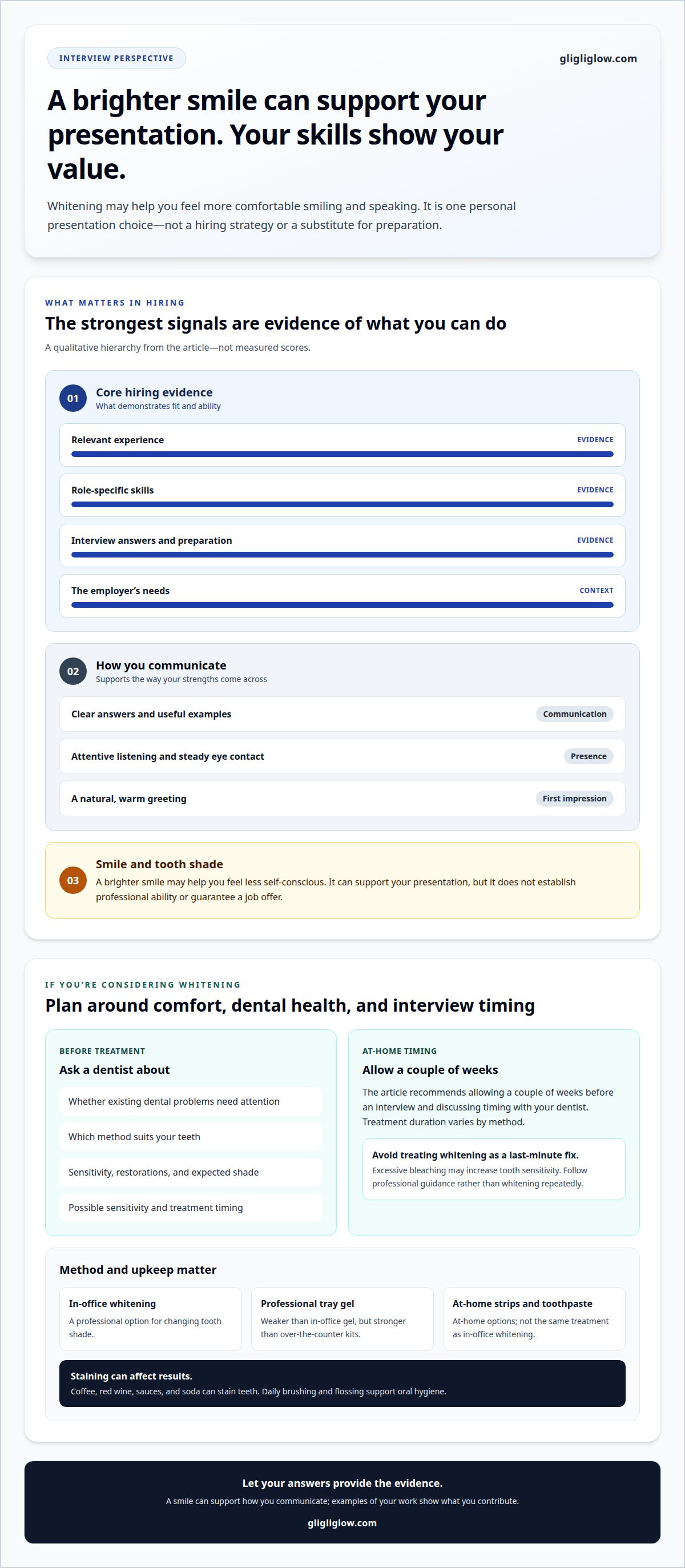
In-office whitening is a professional option for changing tooth shade. Professional tray gel is weaker than in-office gel but stronger than over-the-counter kits. Whitening strips and toothpaste are at-home options, not the same treatment as in-office whitening. Costs depend on the method, your dental needs, and the treatment plan. Dental insurance coverage varies by plan, so check its terms for whitening benefits.
Safe Preparation and Dentist Questions
Choose a whitening approach with your dental health and interview date in mind. Before treatment, ask a dentist whether existing dental problems need attention, which method suits your teeth, and how sensitivity or restorations may affect your options and expected shade. Ask about possible sensitivity, too. Excessive bleaching may increase tooth sensitivity, so follow professional guidance rather than whitening repeatedly for a brighter result.
For at-home whitening, allow a couple of weeks before an interview and discuss timing with your dentist. Treatment duration varies by method, and results depend partly on habits: coffee, red wine, sauces, and soda can stain teeth. Daily brushing and flossing support oral hygiene. If you have sensitive teeth or dental restorations, discuss suitability and shade expectations with a dentist before starting. Plan early, ask clear questions, and keep your focus on the skills you bring.
How Can a Brighter Smile Help You Find a Job?
A job interview combines spoken answers with visual cues. A natural smile can make a greeting feel warmer, while a tense expression may make even a prepared candidate seem uncomfortable. A natural smile can contribute to a positive interview impression, but it is only one part of how you present yourself. A smile is one part of the impression you create, not a measure of your qualifications.
Think about the first moments: you enter, greet the interviewer, and take your seat. A relaxed smile during the greeting can signal openness, especially when it fits the conversation. Smile as you introduce yourself, then listen attentively as the interviewer explains the role. That feels more genuine than holding a fixed grin throughout the meeting.
A brighter smile may help some candidates feel less self-conscious when speaking. That comfort can make it easier to focus on a question instead of worrying about how your teeth look. Pair a calm expression with a clear example of your work, such as a project you completed or a customer concern you resolved. The example demonstrates your value; your expression supports how you communicate it.
Interview success still depends on preparation, relevant skills, and thoughtful answers. A polished appearance can complement those strengths, but it can’t show how you handle deadlines or collaborate with a team. Match your expression to the moment: greet the interviewer warmly, maintain attentive eye contact, and respond naturally as you listen.
If you choose to whiten before an interview, make it part of a wider preparation plan rather than a last-minute fix. Consider at-home teeth whitening options as one personal grooming choice, alongside planning your route, reviewing the job description, and preparing questions. The aim is to arrive feeling ready to discuss your experience, not to rely on a smile alone.
To help maintain whitening results, avoid foods and drinks that stain teeth, including red wine, sauces, coffee, and soda.
Teeth whitening and hiring prospects
Whitening may change how comfortable you feel showing your smile, but it cannot establish that an employer will hire you. Hiring decisions also weigh relevant experience, role-specific skills, interview answers, and the employer’s needs. For example, a sales candidate may choose to feel more comfortable smiling while demonstrating results through clear examples of customer work. The examples, not tooth shade, show job ability.
Claims that whitening directly leads to job offers or higher pay need careful interpretation. Hiring depends on the role, employer, interview performance, and other candidates’ qualifications. Without knowing how a study selected participants or accounted for those factors, a reported difference cannot show that whitening caused the outcome. Treat appearance as one part of an overall impression, not a reliable career tactic or substitute for preparation.
Before deciding, ask yourself: does concern about your teeth distract you during conversations? If you cover your mouth while answering or avoid smiling naturally when greeting an interviewer, feeling more comfortable may be a personal reason to consider whitening. If tooth shade isn’t on your mind, focus on the job description, examples of your work, and thoughtful questions for the employer.
Presentation can matter in a client-facing career because the role involves regular conversations with customers or clients. Still, a polished impression involves more than a bright smile. When explaining a service, attentive listening, a calm tone, and a useful answer all help the interaction feel professional. Whitening may support your comfort, but it doesn’t demonstrate product knowledge, reliability, or problem-solving. Prepare examples of the skills the job requires, and let your answers provide the evidence. That keeps your career prospects grounded in what you can contribute, whether or not you choose to whiten.
In simulated job interviews, participants who had their teeth whitened had a 58% better chance of being hired. Researchers in an employment study found that whiter teeth greatly increased a person's chance of receiving job offers and higher pay; candidates who had their teeth whitened were reported to receive 53% larger salary offers. These findings describe reported outcomes, not a guarantee for any individual.
Appearance in client-facing roles
In client-facing work, appearance is part of how you present yourself, not a measure of your ability. A bright smile may help you feel polished during a customer conversation; careful listening and accurate information show what you can do. Treat cosmetic whitening as a personal choice, not a job requirement or substitute for professional skills.
Consider the role’s daily tasks. A receptionist may greet visitors face to face, while a sales representative may meet clients or speak with them on video. In either setting, a comfortable expression can support a relaxed interaction. Your tone, attention, and response matter too. For example, calmly explaining a return policy shows service skills more clearly than tooth shade.
Build a presentation routine around the whole interaction. Choose interview clothing suited to the position, prepare a concise introduction, and practise answering common questions aloud. If you feel self-conscious about your smile, consider whether whitening would help you feel more at ease. Don’t let a cosmetic change replace preparing a strong example of your work or learning about the employer’s services.
For a client-facing role, try a practice interview: introduce yourself, answer a customer scenario, and notice whether you can speak naturally. If concern about your teeth distracts you, at-home whitening may be one grooming option to explore. Keep expectations focused on personal comfort. A polished appearance can support your presentation, while reliability, clear communication, and practical knowledge help you do the job.
Explore at-home teeth whitening options if whitening feels like a useful part of your interview preparation. Choose a routine that fits your needs, and keep your focus on the strengths you’ll bring to each client conversation.
GLI GLI
GLI GLI offers at-home teeth whitening options for people who want to include whitening in their personal preparation. If you’ve decided a brighter smile could help you feel more comfortable presenting yourself, explore the GLI GLI Teeth Whitening Kit, Teeth Whitening Gel Refills, Teeth Whitening Pen, and LED Whitening Device. These options give you different formats to consider as part of an at-home routine.
Choose an option that suits your needs and follow its product directions. If a dentist has raised concerns about your teeth or sensitivity, discuss whitening before starting. Interview preparation still matters most: plan your answers, review the role, and give yourself time to feel ready.
For questions about at-home whitening options, contact GLI GLI.
Make Your Next Interview Feel Like Your Own
Let your preparation reflect what makes you a strong candidate. Choose personal-care routines that help you feel comfortable, then focus on the experience, ideas, and people skills you want an employer to remember. Teeth whitening for job seekers can be one part of getting ready, but your value comes from what you can contribute in the role.
As you plan your next step, decide whether whitening fits your preferences and routine. If you’d like to explore at-home options, contact GLI GLI to discuss options. There’s no need to chase someone else’s idea of a perfect smile. Aim to feel prepared, present, and ready to speak confidently about the work you can do.
Frequently Asked Questions
The Job Search Secret: Could Teeth Whitening Help You Get Hired?
Teeth whitening for job seekers may help you feel more comfortable smiling, but it can’t secure a job offer. Employers assess your qualifications, communication, and fit for the role. Before deciding, consider whether concern about your smile distracts you during practice interviews. If it doesn’t, tailoring your résumé to the position may deserve more attention.
Does teeth whitening improve job interview confidence or hiring outcomes?
A brighter smile may feel reassuring if you’re self-conscious about your tooth shade, but that alone doesn’t show that whitening improves hiring outcomes. Try answering a practice question aloud before deciding: can you focus on your response, or does worry about your smile interrupt your train of thought? Either way, prepare specific examples that show how you meet the role’s requirements.
How long does teeth whitening take, and how long do results last?
Whitening duration varies by method, and how long results last depends partly on habits. Coffee, red wine, sauces, and soda can stain teeth.


