


Whitening doesn’t automatically damage enamel when products are used as directed. If you’re wondering how to strengthen enamel after whitening, focus on gentle oral care and give your teeth time to rehydrate: saliva helps restore moisture, usually within 24 to 48 hours. Temporary sensitivity can happen, but it often eases within a few days.
It’s understandable to feel concerned if your teeth seem more sensitive or look slightly different just after whitening. That immediate shade may not be the final result. Enamel cannot grow back once it is lost, so protecting the enamel you have matters.
This article explains how whitening affects enamel and why temporary dryness can make teeth feel more sensitive. You’ll find practical ways to ease discomfort, everyday habits that help protect enamel, and signs that mean it’s time to contact a dentist. Gentle choices can help you care for your smile while enjoying its brighter look.
Key Takeaways
- Whitening used as directed doesn’t automatically damage enamel, but excessive or improper use can cause sensitivity and irritation.
- Choose a soft-bristled toothbrush and fluoride toothpaste to keep your daily care gentle and support enamel.
- Temporary sensitivity often eases within a few days; contact a dentist if pain lasts more than three days or you notice persistent white spots.
- Give teeth time to rehydrate after whitening, and be mindful of acidic or staining foods and drinks while they’re more vulnerable.
- Simple habits, such as flossing and rinsing with water after meals, can help protect your smile between whitening sessions.
Does Teeth Whitening Damage Enamel?
Whitening products used as directed don’t damage tooth enamel. At-home strips and professionally supervised whitening both use bleaching agents; correct use matters, while professional care adds dental supervision.
Teeth whitening works by allowing bleaching agents to penetrate enamel and break down stains. Hydrogen peroxide and carbamide peroxide are common agents. Extrinsic stains sit on the tooth surface and can come from coffee, tea, dark berries, or smoking. Intrinsic stains develop within the tooth, so the source and depth of discoloration affect how whitening changes its appearance. Crowns and veneers do not change color with peroxide, which can leave natural teeth and restorations looking different.
Sensitivity During Enamel Rehydration
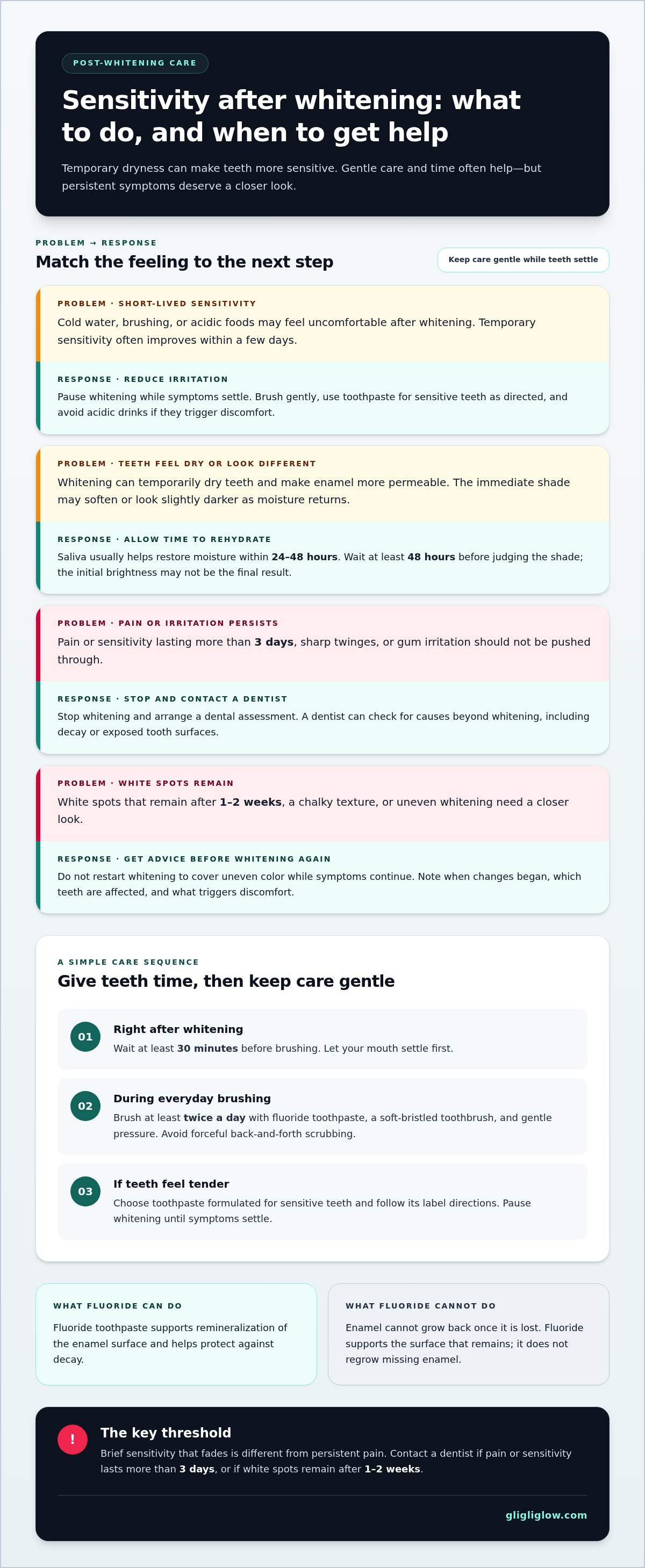
Temporary sensitivity can occur as teeth regain moisture after whitening. Some whitening products dry teeth, and bleaching can temporarily make enamel more permeable, leaving teeth more responsive to cold drinks or brushing. Saliva helps rehydrate teeth, usually within 24 to 48 hours. The immediate shade may also soften as moisture returns. Give your smile time to settle before judging the final color, and notice whether sensitivity eases as your teeth rehydrate.
Fluoride Toothpaste for Enamel Care
Fluoride toothpaste supports enamel by helping remineralize its surface. Enamel does not grow back after it is lost, so daily protection matters. Brush with fluoride toothpaste at least twice a day, using a soft-bristled toothbrush and gentle pressure. This cleans your teeth without unnecessary scrubbing. Fluoride cannot regrow missing enamel, but it can support the surface that remains and help protect against decay.
Keep brushing gentle after treatment. Use a soft-bristled toothbrush, and avoid forceful back-and-forth scrubbing. If your teeth feel tender, choose toothpaste formulated for sensitive teeth and follow its label directions. Wait at least 30 minutes after whitening before brushing, allowing your mouth to settle first. Consistency matters more than pressure: twice-daily brushing with fluoride toothpaste supports enamel care without turning your routine into an abrasive polish.
Color rebound is also normal to notice. Teeth can look especially bright immediately after bleaching because enamel has temporarily lost moisture. As rehydration occurs, the shade may appear slightly darker within 24 to 48 hours. The temporary light-scattering effect from dehydrated enamel typically resolves within 24-72 hours. That shift doesn’t mean the whitening has failed. Allow at least 48 hours before assessing the shade, and avoid judging your result from the first mirror check alone.
Sensitivity relief and when to contact a dentist
After whitening, cold water, brushing, or acidic foods may feel uncomfortable. Temporary sensitivity usually improves within a few days. Use toothpaste for sensitive teeth as directed, brush gently, and pause whitening while symptoms settle. Avoid acidic drinks if they trigger discomfort, as they can make an already sensitive mouth feel worse.
Notice what you feel and how long it lasts. Brief sensitivity that fades is different from persistent pain, sharp twinges, or gum irritation. Stop whitening and contact a dentist if these symptoms develop. Also seek advice if teeth feel chalky or whitening looks uneven. These changes deserve a closer look, not another round of bleaching.
When to contact a dentist
Contact a dentist if tooth pain or sensitivity lasts more than three days after whitening. White spots that remain after 1-2 weeks should also be checked. These signs can have different causes, so note when they started, which teeth are affected, and whether cold, heat, or acidic foods trigger them. That detail helps the dentist assess your oral health and recommend an appropriate next step.
Do not restart whitening to cover uneven color while symptoms continue. Stop treatment and arrange a dental assessment for persistent pain, sharp sensitivity, gum irritation, a chalky texture, or uneven results. If discomfort has not eased after a few days, a dentist can assess your teeth before you whiten again. This is especially important if you already have sensitivity or gum recession, which can increase discomfort during treatment.
Dentist treatments and safer whitening choices
A dentist can check for causes beyond whitening, such as decay or exposed tooth surfaces. For lightly damaged enamel, dentists may use fluoride treatments to help remineralize and strengthen it. They can also advise on suitable products based on your teeth and existing sensitivity. Custom whitening treatments are designed to reduce sensitivity and provide even coverage.
For future whitening, follow the product directions rather than extending treatment in pursuit of faster results. Excessive or improper use can contribute to sensitivity, gum irritation, enamel dehydration, and surface roughness. Before another treatment, discuss your sensitivity history and oral health with a dentist. They can consider your teeth, existing restorations, and the type of discoloration when advising on an approach.
The goal is relief, not pushing through discomfort. Stop if pain becomes sharp or persistent, and let a dentist assess what is happening before you resume whitening. Tracking symptoms and triggers gives you a clear, practical starting point for that conversation.
How whitening affects enamel moisture and sensitivity
Whitening can temporarily affect enamel moisture and make teeth feel sensitive. Understanding these changes can help you tell short-lived discomfort from signs that need attention.
Temporary Enamel Dehydration
Temporary enamel dehydration means teeth lose some moisture during whitening. Some whitening products can temporarily dry teeth. As moisture shifts, enamel can scatter light differently, making teeth look unusually bright immediately after treatment. That visual change can be temporary rather than a lasting shade result.
Saliva does much of the rehydrating after whitening. Teeth typically regain moisture within 24 to 48 hours, while the temporary light-scattering appearance often resolves within 24-72 hours. During that window, the shade may look slightly darker as moisture returns. Wait at least 48 hours before assessing the color, rather than adding another cosmetic treatment based on the first mirror check.
Hydrogen peroxide and carbamide peroxide break down stains by penetrating enamel. Used improperly or excessively, whitening products can contribute to dehydration, surface roughness, and sensitivity. This does not mean every whitening treatment causes lasting enamel erosion. The product, its acidity, and whether you follow its directions all matter. Highly acidic products may weaken enamel over time if misused.
Sensitivity After Whitening
Temporary sensitivity is a short-lived response to whitening agents that can make teeth react to cold, heat, or touch. Whitening can temporarily increase enamel permeability, and discomfort commonly improves within a few days. For example, a sip of cold water may cause a brief twinge. Notice whether the sensation is fading instead of repeating whitening to chase a brighter shade.
Teeth may also feel more sensitive as they rehydrate and their moisture balance returns after treatment. Saliva helps restore that balance, but the sensations can make eating or brushing uncomfortable. Use gentle oral care and avoid triggers you notice, such as very cold drinks. Persistent or sharp pain differs from brief sensitivity and calls for dental advice.
Do not assume discomfort proves that whitening has permanently damaged your enamel. However, excessive or improper use can cause sensitivity and gum irritation. Stop whitening if symptoms become sharp, persistent, or uneven, and contact a dentist if sensitivity lasts more than three days after treatment.
Whitening with Thin or Sensitive Enamel
People with naturally thin enamel, gum recession, or pre-existing sensitivity may be more likely to feel discomfort during whitening. Exposed tooth areas can react more strongly to bleaching agents, even when the rest of the smile feels fine. Consider your dental history before starting a cosmetic treatment, especially if cold foods already cause a twinge.
A dentist can assess your enamel and gum health before advising on whitening. This can help identify concerns that could affect comfort, including existing sensitivity or recession. If you already have symptoms, get dental guidance before starting or resuming treatment. Follow product instructions closely, since excessive use can contribute to surface roughness and irritation, not just temporary dryness.
If whitening leaves chalky-looking areas, gum irritation, or persistent pain, stop treatment. A dentist can examine these changes and determine whether further whitening is appropriate. Duration and severity matter: brief sensitivity may ease as teeth rehydrate, while continuing or sharp discomfort deserves attention.
Oral hygiene practices to protect enamel
For 48 hours after whitening, avoid acidic and staining foods and drinks, including coffee, red wine, cola, and dark berries. Alcohol, soda, and caffeine are best avoided for 24-48 hours. These choices help limit contact with substances that can stain newly whitened teeth.
Oral Hygiene After Whitening
After whitening, clean your teeth gently and limit new stains. After meals, swish with water to clear food and colored drinks from tooth surfaces. Floss once a day to remove food and plaque between teeth, where a toothbrush cannot reach. These simple steps help keep your smile bright without relying on extra whitening.
Keep a steady care routine. Brush twice daily with fluoride toothpaste, and use a soft-bristled brush to clean gently. You may wish to wait before using mouthwash after whitening. If you choose fluoride mouthwash afterward, the recommended frequency is once or twice daily. Follow the product label, and don’t add extra whitening sessions to compensate for a coffee stain.
Saliva also supports enamel care after meals. Chewing sugar-free gum can increase saliva production, while drinking water helps wash away residue. If you sip an acidic drink, use a straw to reduce contact with tooth surfaces. After a staining drink, swish with water rather than brushing immediately, especially if the drink is acidic.
Foods and Drinks to Avoid After Whitening
Stain-causing foods and drinks are best avoided during whitening and for 48 hours afterward. Coffee, red wine, cola, and dark berries can leave pigments on newly whitened teeth. Acidic foods and drinks also deserve a pause because acid can contribute to enamel erosion. These choices help preserve the result while teeth are more vulnerable to staining.
After the first 48 hours, be mindful of frequent exposure rather than treating any single meal as a setback. If coffee or tea is part of your routine, drink water afterward to rinse colored residue from your mouth. Limit acidic and sugary foods to help protect enamel. A crunchy apple can also prompt saliva flow as you eat, supporting a cleaner-feeling mouth.
Keep your routine manageable: have water nearby, floss between your teeth, and avoid tobacco products, which can stain teeth and affect oral health. Regular dental cleanings remove plaque buildup and surface stains, while check-ups help monitor oral health. These habits support a fresh, bright appearance without aggressive brushing or frequent whitening.
Whitening safety and enamel erosion
Teeth whitening and enamel erosion aren’t the same thing. Professional whitening is generally considered safe for healthy enamel under dental supervision and when used as directed. The key distinction is how the product is formulated and used. Bleaching agents break down stains, while misuse or highly acidic formulas can contribute to enamel weakening over time.
Hydrogen peroxide and carbamide peroxide are common whitening agents. Their presence alone does not mean a product will erode enamel. Risk increases when you use whitening products too often, ignore instructions, or continue despite irritation. Excessive use can contribute to sensitivity, gum irritation, dehydration, and surface roughness. Treat the directions as limits, not suggestions to extend treatment for a faster cosmetic result.
At-home products are not all alike. Over-the-counter whitening products are generally considered safe when they carry the ADA Seal of Acceptance and are used as directed. Whitening toothpaste may contain abrasives and chemicals, including low concentrations of hydrogen peroxide, so use it as directed rather than scrubbing harder. For professional whitening, dental supervision helps account for existing sensitivity and the condition of your teeth.
Acidity matters beyond whitening products. Frequent exposure to acidic drinks can challenge enamel, especially alongside repeated bleaching or forceful brushing. After whitening, drink water to help maintain enamel integrity. Limiting acidic and sugary foods also reduces exposure that can contribute to erosion. If a drink is acidic, sipping it through a straw can reduce contact with tooth surfaces.
Saliva helps remineralize tooth surfaces and restore moisture balance after whitening. Calcium-containing dairy products can also support enamel care as part of a balanced diet. These habits support your teeth, but they do not regrow enamel that has already been lost. A fluoride routine remains useful for protecting the surface and helping prevent decay.
Plan whitening cycles with recovery in mind. Wait at least three to six months between at-home whitening cycles unless a dentist advises otherwise. Do not repeat a cycle just because the immediate shade changes as teeth rehydrate. Stop if you develop persistent pain, gum irritation, or a chalky texture, and seek dental advice before resuming. A dentist can assess whether sensitivity, erosion, or another issue needs attention.
For a more mindful at-home routine, explore at-home teeth whitening options and follow each product’s directions carefully.
GLI GLI: GLI GLI Teeth Whitening Kit
The GLI GLI Teeth Whitening Kit offers an at-home option if you are considering a whitening routine. GLI GLI also offers Teeth Whitening Gel Refills, a Teeth Whitening Pen, and an LED Whitening Device. Treat whitening as a cosmetic step, not a way to repair enamel. Gentle brushing, fluoride toothpaste, and following product directions remain important parts of everyday care.
If your teeth are persistently sensitive, pause whitening and speak with a dentist before starting or resuming treatment. If you are ready to explore at-home whitening, GLI GLI’s range offers options to consider as part of a mindful routine.
Visit gligliglow.com to explore the whitening options.
Make Your Next Whitening Choice With Care
A brighter smile is most rewarding when it fits comfortably into your everyday routine. Think of whitening as one part of personal care, not a result to chase with repeated treatments. Knowing how to strengthen enamel after whitening can help you make thoughtful choices and keep your routine gentle.
GLI GLI offers the GLI GLI Teeth Whitening Kit, GLI GLI Teeth Whitening Gel Refills, and GLI GLI Teeth Whitening Pen for at-home whitening. Choose an option that suits your routine, follow its directions, and care for your smile gently. If you have ongoing dental concerns, seek guidance from a dentist before whitening.
Explore GLI GLI’s at-home whitening options and take your next step toward a smile that feels like you.
Frequently Asked Questions
What Is Tooth Enamel?
Tooth enamel is the hard, mineral-rich outer covering of each tooth’s visible crown. It shields the softer tissues beneath from chewing forces, temperature changes, and everyday acids. Enamel has no living cells that rebuild a missing section, so a worn or chipped area cannot simply grow back. For example, a dentist may assess a chipped edge differently from temporary dryness after whitening.
Can Overusing Whitening Products Cause Problems?
Using whitening gel more often than directed, leaving it on longer, or layering products can trigger sensitivity and gum irritation. For example, do not add a whitening pen between strip sessions unless the product directions allow that routine. Follow each product’s instructions, avoid combining methods, and stop whitening if discomfort or irritation begins. More exposure does not make whitening safer or the results more durable.
When are white spots after whitening normal - and when should they be checked?
White spots can appear temporarily after whitening, but their appearance alone doesn’t identify the cause. Notice whether they fade as your teeth settle, and avoid adding another whitening treatment to hide them. If white spots remain after 1-2 weeks, have a dentist check them. A photo taken in similar lighting can help you compare the same area over time.
Why do teeth look chalky or overly white right after whitening?
Teeth can look chalky or unusually bright because whitening temporarily dehydrates enamel, changing how its surface scatters light. That first shade may not represent the settled result. Instead of repeating treatment, wait at least 48 hours before assessing the color. If a chalky texture persists, or the appearance comes with discomfort, stop whitening and seek dental advice.
Does teeth whitening permanently weaken or damage enamel?
Whitening used as directed does not automatically cause permanent enamel damage. The concern is excessive or improper use, particularly repeated exposure or highly acidic products, which may contribute to surface problems over time. Temporary sensitivity is not, by itself, proof of lasting damage. If you notice persistent pain, a rough texture, or gum irritation, stop treatment and ask a dentist to assess your teeth.
How long does enamel take to recover after teeth whitening?
Teeth typically rehydrate within 24 to 48 hours after whitening, and the temporary light-scattering appearance can take 24-72 hours to resolve. That describes moisture balance and appearance, not regrowth of enamel that has been lost. Give the shade time to settle before judging it. If discomfort continues beyond three days, contact a dentist rather than restarting whitening.
What toothpaste or fluoride products help protect enamel after whitening?
Fluoride toothpaste is a practical daily choice because fluoride helps remineralize enamel. To strengthen enamel after whitening, use fluoride toothpaste as part of regular brushing and choose a soft-bristled brush for gentle cleaning. If sensitivity is your main concern, toothpaste formulated for sensitive teeth may help. Follow its label and avoid adding several whitening products to your routine.
Should you use remineralizing products like hydroxyapatite or fluoride after whitening?
Fluoride products are a supported option for enamel care because fluoride helps remineralize the tooth surface. Hydroxyapatite products are also marketed for remineralizing care, but formulas and directions differ. Do not assume two products are interchangeable or use them more often than directed. If you are weighing options, especially with ongoing sensitivity, ask a dentist which ingredients suit your teeth and current oral-care routine.


