


Can you brighten your smile at home without making sensitive teeth feel worse? A teeth whitening kit for sensitive teeth can be a more comfortable place to start, but choosing one takes more than trusting a reassuring label. If cold drinks, whitening, or a favourite citrusy snack has made you wince, it makes sense to want a gentler plan.
That concern is worth taking seriously. Whitening ingredients can temporarily stimulate the nerves inside your teeth, so sensitivity may happen. Pushing through discomfort is not the goal. Careful product selection, following the directions, and knowing when to stop can help you approach whitening with more confidence.
Here, you’ll learn what to look for in a sensitive-teeth kit, how to use it cautiously, and when to pause and seek dental advice. We’ll also explain why sensitivity can occur and how to recognise when it’s time to stop. GLI GLI offers sensitive-teeth whitening solutions developed by dental experts, giving you an at-home option to consider as you build a comfort-first routine.
Key Takeaways
- A brief twinge from a trigger is different from ongoing or unexplained pain, which calls for a more cautious approach.
- Choose a teeth whitening kit for sensitive teeth by reviewing its complete directions, application method, and sensitivity guidance, not just its headline claims.
- Compare strips, gels, trays, and LED formats by how they’re used. The format alone doesn’t guarantee greater comfort or better results.
- Check suitability and follow the kit’s specific directions. Don’t exceed them or combine whitening products without professional guidance.
- GLI GLI offers specialised sensitive-teeth whitening solutions developed by dental experts. Pause and seek dental advice if sensitivity persists or feels concerning.
Why can teeth feel sensitive during whitening?
Wanting a brighter smile can feel complicated when cold water or a sweet treat already makes your teeth twinge. Tooth sensitivity usually means a brief, sharp response to a trigger such as temperature, touch, or sweetness. The dental term dentine hypersensitivity describes this kind of trigger-related discomfort when dentine is exposed and other causes have been ruled out. It’s a description, not a diagnosis you can make from symptoms alone. Whitening discomfort varies: some people notice temporary sensitivity, while others feel none.
What happens inside a sensitive tooth?
Think of enamel as a hard outer shield. Beneath it is dentine, a softer layer with tiny channels leading towards the tooth’s nerve. When dentine is exposed, temperature changes or contact may stimulate the nerve and cause a quick twinge.
Dentine can become exposed for different reasons, including gum recession or enamel wear. Sensitivity can also be linked to dental problems such as a cavity or crack. That’s why a new or changing reaction shouldn’t automatically be blamed on whitening.
Why might whitening make teeth feel more reactive?
Some whitening ingredients, including hydrogen peroxide or carbamide peroxide, can pass through tooth structure. This may affect fluid movement in dentine’s tiny channels and stimulate the nerve, making a tooth feel temporarily more reactive. The overview of Tooth whitening also describes sensitivity as a possible side effect. Formulas and application methods differ, so people’s experiences can differ too.
Existing sensitivity may affect how comfortable whitening feels, but it doesn’t mean every whitening formula will cause discomfort. An LED device on its own also doesn’t show that a product will feel gentler or work better. If you’re considering a teeth whitening kit for sensitive teeth, focus on its specific directions and your own response rather than assuming one format suits everyone.
Pay attention to the pattern. A brief, mild twinge that settles is different from persistent, severe, or focused pain in one tooth. Pause whitening and seek advice from a dental professional if pain is ongoing, intense, localised, unexplained, or continues after you stop. A professional can help identify whether sensitivity has another cause before you decide what to do next.
What should a teeth whitening kit for sensitive teeth include?
A sensitivity-friendly label may catch your eye, but it can’t tell the whole story. Compare what the kit contains, how it’s applied, the complete directions, and the guidance provided if discomfort occurs. The American Dental Association on whitening outlines different whitening methods and notes that tooth sensitivity can occur. Clear product information helps you understand what to expect and how to use the kit.
Which product details matter most for sensitive teeth?
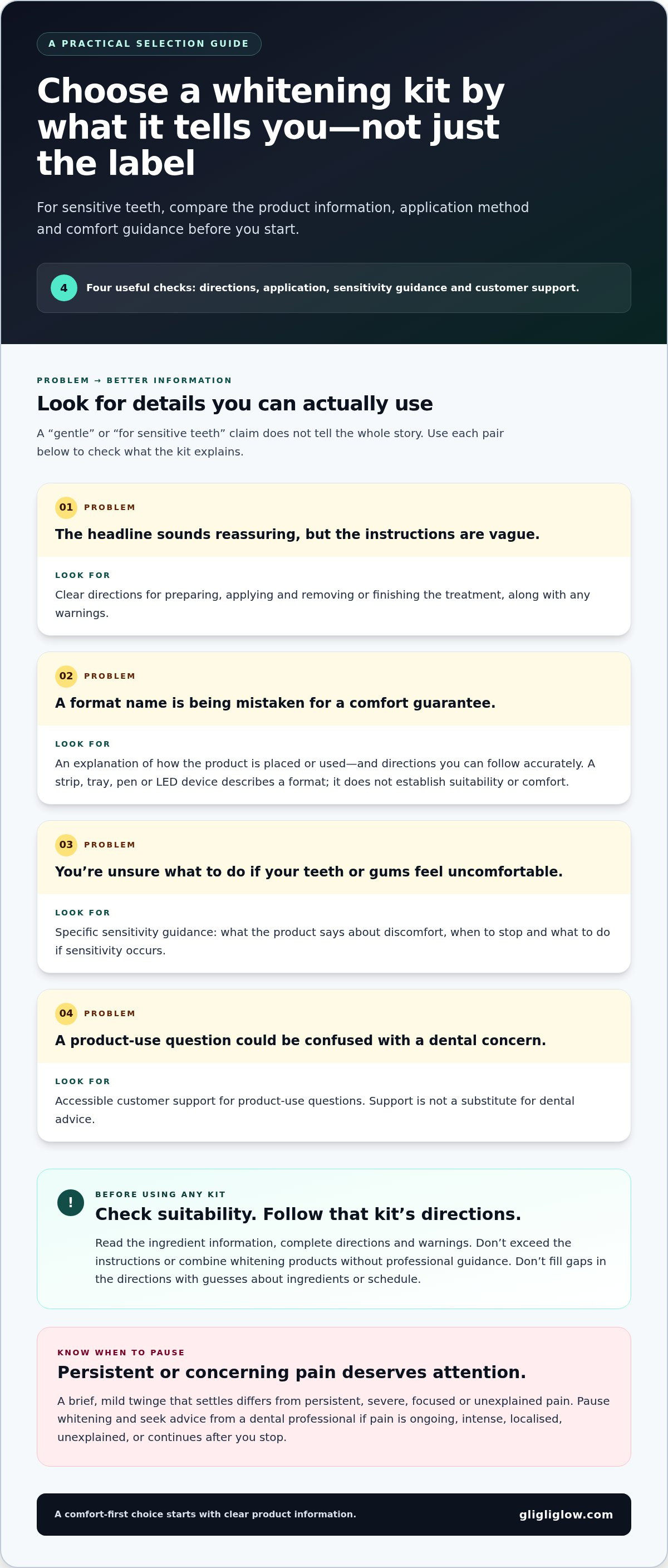
Read the ingredient information and all product directions before starting. Check how the product is applied, what warnings are provided, and what the instructions say to do if your teeth or gums feel uncomfortable. A tray, strip, pen, or LED device describes a format, not whether a kit is suitable for sensitive teeth. Ingredients and intended use matter too, so don’t assume products in different formats work alike.
Suitability depends on the product directions and your individual dental health. Use this table to compare the information each kit provides:
| What to compare | What to look for |
|---|---|
| Directions | Clear instructions for preparing, applying, and removing or finishing the treatment, plus any warnings. |
| Application method | An explanation of how the product is placed or used, and whether the directions are easy for you to follow accurately. |
| Sensitivity guidance | Specific advice about discomfort, when to stop, and what to do if sensitivity occurs. |
| Customer support | Accessible support information for product-use questions, without treating it as a substitute for dental advice. |
How can you assess comfort-focused claims?
Separate practical details from broad phrases such as “gentle” or “for sensitive teeth.” Useful comfort guidance explains how to use the product, identifies relevant warnings, and tells you how to respond to discomfort. Don’t fill gaps in the instructions with guesses about ingredients or a schedule. Follow the directions for that specific kit.
Comparing strips in particular? Explore this sensitive whitening strips guide for a closer look at that format. GLI GLI’s at-home whitening range includes specialised sensitive-teeth solutions developed by dental experts. You can explore GLI GLI whitening products and review the product information alongside your own comfort needs.
How do at-home whitening options compare when teeth are sensitive?
Different formats change how whitening is applied, not whether it will feel comfortable. Strips, trays, pens, and kits with a device each have their own steps. The practical choice is one whose directions you can follow correctly and whose use suits your situation. An LED device alone doesn’t prove that a kit will whiten better or feel gentler.
| Format | Practical consideration | Sensitivity caveat |
|---|---|---|
| Whitening strips | Flexible strips sit directly on the teeth. Placement and coverage depend on following the product instructions. | Fit and contact can vary. Don’t assume strips are gentler than other formats. |
| Tray-based kits | A tray holds whitening product against the teeth, so careful application and use as directed matter. | Tray format alone doesn’t establish suitability for sensitive teeth. |
| Whitening pens | A pen applies product to selected tooth surfaces and may be convenient for targeted application. | Use only as directed. The format doesn’t guarantee greater comfort. |
| Kits with an LED device | These pair a device with whitening product and require following directions for both. | The presence of a light doesn’t prove better results or less sensitivity. |
Are whitening kits, pens and strips different for sensitive teeth?
They differ in application and routine, but no format is universally gentler. Suitability depends on the specific product directions and the person using it. For broader selection context, see this at-home teeth whitening kit guide. Whatever format you consider, read its full directions rather than adapting another product’s routine.
Comfort can also depend on how a product is used. A review of the risks associated with tooth whitening discusses sensitivity in relation to factors such as peroxide concentration and treatment duration. Don’t extend wear time, add extra applications, or combine products unless a dental professional advises you to.
When is a dentist’s advice the better next step?
Pause before whitening if sensitivity is persistent, severe, unexplained, or focused in one tooth. Existing dental concerns, including pain or a suspected tooth problem, should be assessed before starting a home routine. A teeth whitening kit for sensitive teeth is a cosmetic product, not a way to diagnose or treat the cause of discomfort. A dental professional can help you decide whether whitening is appropriate for your oral health.
How can you use a sensitive-teeth whitening kit more cautiously?
A comfort-first routine starts before you apply anything. Check the instructions and consider how your teeth and gums feel that day. A teeth whitening kit for sensitive teeth still needs to be used exactly as directed. The label isn’t a reason to ignore discomfort or skip the product’s warnings.
What should you do before your first whitening session?
Before opening the product, review its full directions, warnings, and ingredient information. If you have unresolved oral-health concerns, get dental advice before whitening. If your teeth or gums already feel sore or unwell, postpone starting rather than adding another potential trigger.
A cautious routine to follow
- Read the specific kit directions and check suitability. Confirm how the product is meant to be applied and review every warning. Don’t borrow instructions from a different kit or format.
- Notice your starting point. Make a mental note of any existing sensitivity, tenderness, or gum discomfort. If symptoms are unexplained or concerning, pause and seek dental advice before using the kit.
- Follow the application steps precisely. Use the product only as directed. Don’t extend the application, add extra product, or repeat a step because you want faster results.
- Keep the routine simple. Don’t combine whitening products, such as a kit and a separate whitening pen, unless a dental professional has advised you to. Using multiple products can make it harder to know what’s causing a reaction.
- Stop if notable discomfort occurs. Pause use and follow any product-specific guidance for discomfort. Don’t continue the session to “push through” significant pain.
- Check how you feel afterwards. If sensitivity is strong, persistent, unusual, or focused in one tooth, leave the product aside and ask a dental professional for advice before deciding whether to resume.
Follow the product directions, and don’t continue through significant pain. A cautious routine isn’t about guessing a new schedule or treating sensitivity yourself. Use the instructions provided, notice any changes, and know when to stop.
GLI GLI offers specialised sensitive-teeth whitening solutions developed by dental experts. If you’re considering the GLI GLI Teeth Whitening Kit, use its specific directions as your guide, and pause if discomfort calls for a closer look.
How does GLI GLI support a comfort-first whitening routine?
You now have a practical way to compare products and use them thoughtfully. GLI GLI offers at-home whitening products, including specialised solutions for sensitive teeth developed by dental experts. That gives you options to explore, but it doesn’t mean every product suits every person or promises a pain-free experience. Check the directions and suitability information for the specific product you’re considering.
What GLI GLI’s at-home whitening range offers
The GLI GLI range includes the GLI GLI Teeth Whitening Kit, Teeth Whitening Gel Refills, a Teeth Whitening Pen, and an LED Whitening Device. These are different product categories with their own intended uses and instructions. Sensitive-teeth solutions are also part of the range. Check the product information for the specific format you’re considering.
That distinction matters. A kit, refill, pen, or LED device isn’t interchangeable just because each is connected with whitening. Read the directions for the exact product you choose, including any warnings and guidance about discomfort. Avoid guessing at ingredients, use schedules, or how products can be combined. If your teeth or gums are already bothering you, consider dental advice before beginning.
How to make your next step feel informed
Keep your decision simple and personal. Before using any teeth whitening kit for sensitive teeth, check these points:
- Directions: Can you understand and follow the specific product instructions?
- Suitability: Does its product information address your needs and any relevant warnings?
- Comfort guidance: Does it explain what to do if discomfort occurs?
- Dental health: Do you have ongoing, severe, or unexplained symptoms that need professional advice first?
Whitening responses can vary from person to person, and comfort is part of the experience too. Follow the product directions rather than adjusting the routine to chase faster results. If sensitivity persists or feels unusual, pause use and seek advice from a dental professional instead of trying another whitening product to mask the problem.
If you feel ready to take a considered next step, explore the GLI GLI teeth whitening kit and its product information. Take your time, choose with your dental health in mind, and let a comfortable, well-informed routine guide your decision.
Choose a Brighter Smile Routine That Feels Right
A comfortable whitening routine starts with thoughtful choices. Compare the full product directions, consider your dental health, and follow the instructions rather than extending or combining treatments. Sensitivity can vary, so pause if discomfort becomes significant and seek dental advice if it persists or feels unusual.
A teeth whitening kit for sensitive teeth should fit your needs and the guidance provided for that specific product. GLI GLI offers specialised solutions for sensitive teeth developed by dental experts, alongside at-home kits, gel refills, a whitening pen, and an LED whitening device. These options let you explore a routine with care, without assuming every format will suit everyone.
Ready to take a considered next step? Explore the GLI GLI Teeth Whitening Kit and review its product information. Go at your own pace, listen to your teeth, and make your smile-care routine feel confidently yours.
Frequently Asked Questions
Is a teeth whitening kit safe for sensitive teeth?
A teeth whitening kit may suit some people with sensitive teeth, but no kit is universally safe for everyone. Suitability depends on the product directions and your dental health. Read the complete instructions and warnings before use, including what to do if discomfort occurs. If sensitivity is already persistent, unexplained, or linked to another oral-health concern, seek dental advice before starting rather than relying on a “gentle” label alone.
Can I whiten my teeth if they are already sensitive?
You may be able to whiten if sensitivity is occasional, but ongoing or unexplained symptoms deserve caution. Pause before starting if your teeth or gums feel unwell, and seek dental advice if symptoms persist or are severe. Follow the directions for the specific kit, and don’t whiten over unresolved oral-health concerns. A dental professional can help you understand whether whitening is appropriate for your situation.
What should I look for in a teeth whitening kit for sensitive teeth?
Check the complete directions, ingredient information, warnings, and any specific guidance about sensitivity. Look for clear instructions on application and what to do if discomfort occurs. A tray, strip, pen, or LED device doesn’t establish suitability, and a comfort-focused headline can’t tell you how you’ll respond. Compare the actual product information, avoid assumptions about individual results, and choose only a routine you can follow as directed.
What should I do if my teeth hurt during whitening?
Pause or stop whitening according to the product directions, and don’t continue through significant pain. Check the kit’s specific guidance for discomfort rather than trying an unverified remedy or changing the routine yourself. Contact a dental professional if symptoms are severe, persistent, unusual, or focused in one tooth. Don’t restart simply because the discomfort eases. Get advice if you’re unsure whether it’s appropriate to continue.
Are whitening strips or kits better for sensitive teeth?
Neither strips nor kits are automatically gentler for everyone. Compare the specific directions, application method, warnings, and sensitivity guidance instead of choosing by format alone. Your dental health and personal response matter too. If sensitivity is ongoing, severe, or unexplained, ask a dental professional for advice before whitening. A format that feels manageable for one person may not be the right fit for someone else.
Can I use whitening toothpaste and a whitening kit together if my teeth are sensitive?
Don’t combine whitening products unless a dental professional advises you to. Using whitening toothpaste alongside a kit may increase your overall exposure to whitening products or make it harder to identify what triggers sensitivity. Follow the directions for each product, and don’t add extra steps to speed up results. Don’t assume a particular toothpaste will prevent discomfort, and seek dental advice if sensitivity is a concern.


